2026-11-13
A restaurant terrace can look attractive in the morning and become almost unusable by midday if there isn't enough shade. For restaurants with large outdoor seating areas, umbrellas are not just decorative furniture. They affect table placement, customer comfort, staff movement, and how much of the terrace can actually be used.
Choosing umbrellas for one small patio is relatively straightforward. A project involving several dining areas, or multiple restaurant locations, requires more planning. Canopy size, frame construction, fabric, base design, and replacement options all need to be considered before ordering.
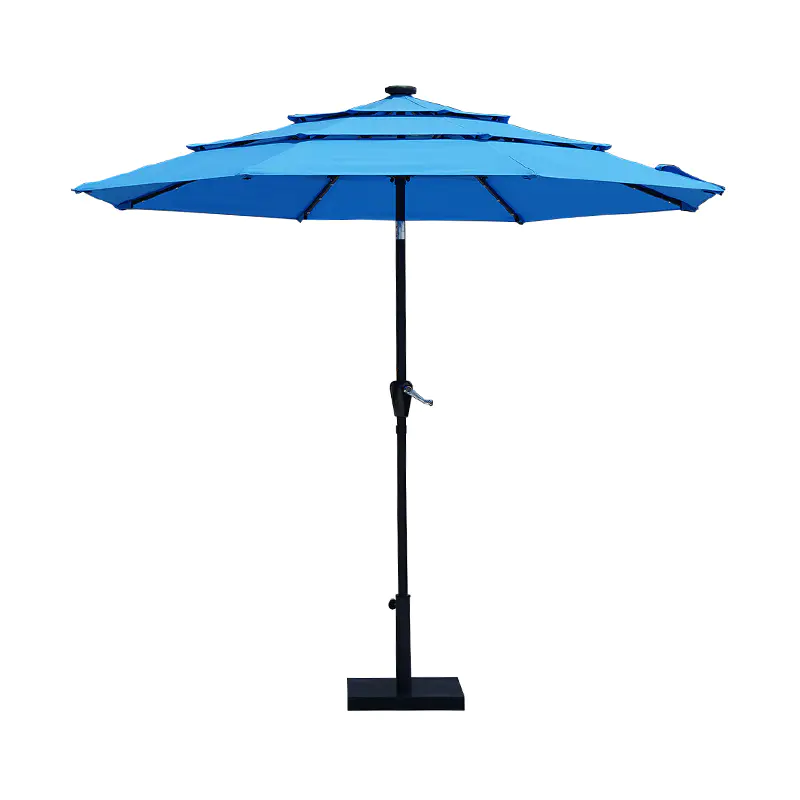
Cover More Seating Without Blocking Movement
Large terraces rarely have a single seating arrangement. Some areas have small dining tables, others have long communal tables, and there may also be lounge seating and service walkways.
A separate umbrella over every table isn't always practical. Large commercial parasols can cover several seats at once, while smaller models are easier to position around individual tables.
Before deciding on umbrella sizes, consider:
For a large project, marking the proposed umbrella positions on the terrace layout is a useful starting point. It also helps avoid ordering more units than the available space can accommodate.
Choosing Frame Materials for Daily Commercial Use
Restaurant umbrellas are opened, closed, moved, and exposed to weather repeatedly. A frame that works well for occasional residential use may not hold up to the same routine in a busy restaurant.
Aluminum is popular because it is lightweight and naturally resistant to corrosion. Staff can generally handle and reposition aluminum umbrellas more easily.
Steel offers greater structural strength for certain large-format designs, although its protective coating needs attention in wet or coastal locations. Scratches in the coating can leave the underlying metal exposed.
Wood has a different appeal. It suits garden restaurants, resorts, and outdoor spaces with a natural design theme. However, moisture protection and periodic surface maintenance are necessary.
Don't overlook the smaller components. Ribs, hinges, connectors, screws, and opening mechanisms experience repeated stress. These parts deserve as much attention as the main pole.
Selecting Canopy Fabric for Outdoor Conditions
A canopy may spend the entire day under direct sunlight, with occasional exposure to rain and wind. Fabric quality has a direct effect on fading, cleaning frequency, and replacement costs.
Several materials are commonly used:
| Canopy material | Main characteristics | Points to consider |
|---|---|---|
| Solution-dyed acrylic | Good UV resistance and color retention | Higher initial cost |
| Coated polyester | Water-resistant and relatively easy to maintain | Coating durability varies |
| Standard polyester | Lightweight and economical | UV and color performance depend on grade |
| Olefin | Lightweight and available in moisture-resistant grades | Check UV performance and fabric quality |
Solution-dyed acrylic is often used for premium hospitality projects because the color is incorporated into the fiber during production. Polyester offers a more economical option, particularly when supplied with suitable protective treatments.
One detail worth checking is the actual test data. Terms such as waterproof, UV-resistant, and fade-resistant can mean different things depending on the fabric specification. Ask for results covering water repellency, UV exposure, colorfastness, and tear strength.
Which Umbrella Design Works Best for a Large Terrace?
The shape and support arrangement determine how much usable space remains underneath the canopy.
| Umbrella design | Structural arrangement | Main advantage | Typical application |
|---|---|---|---|
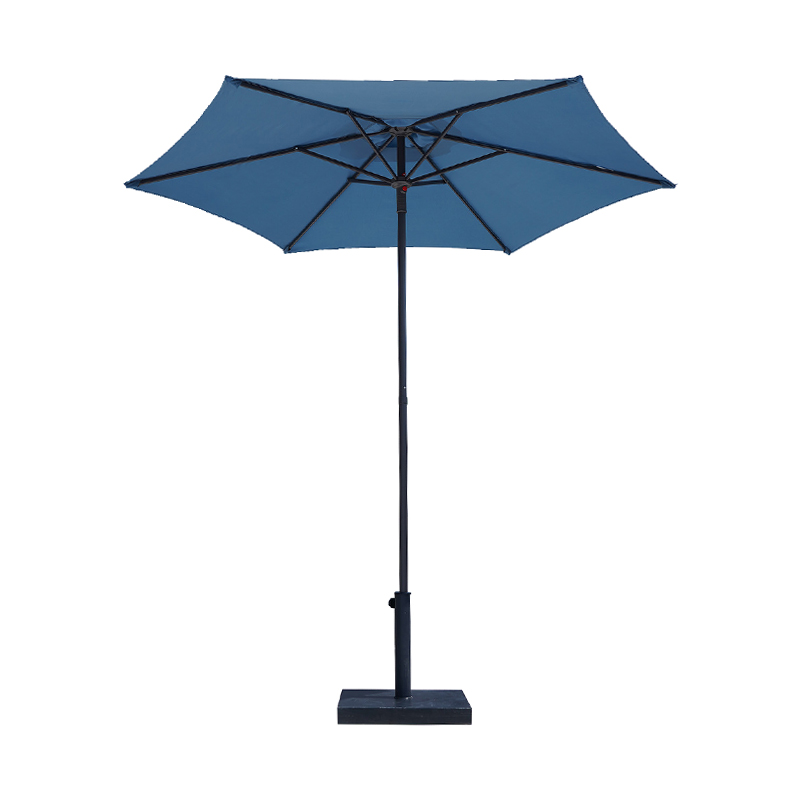
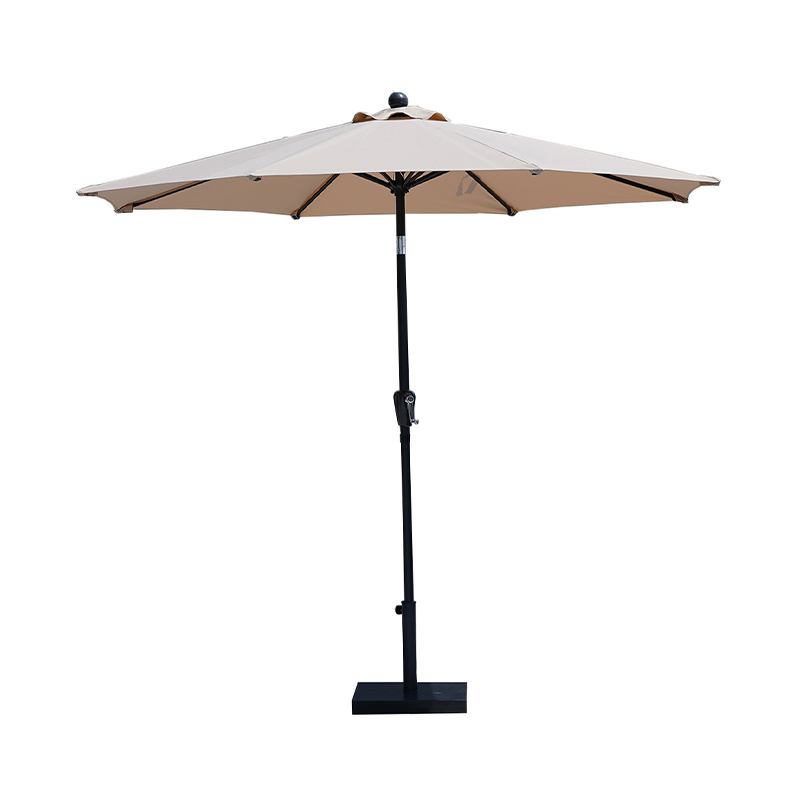
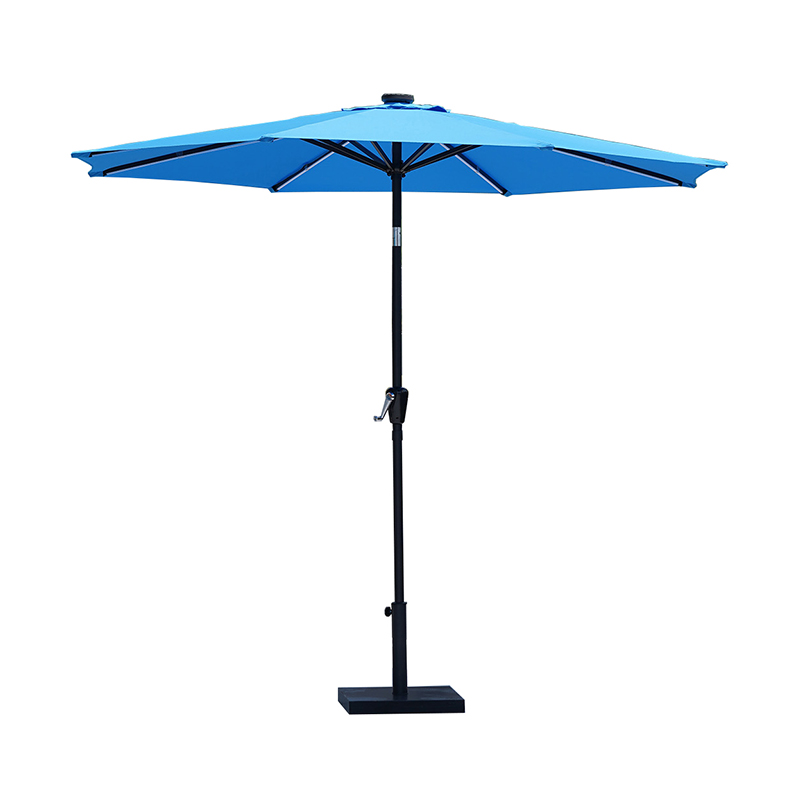
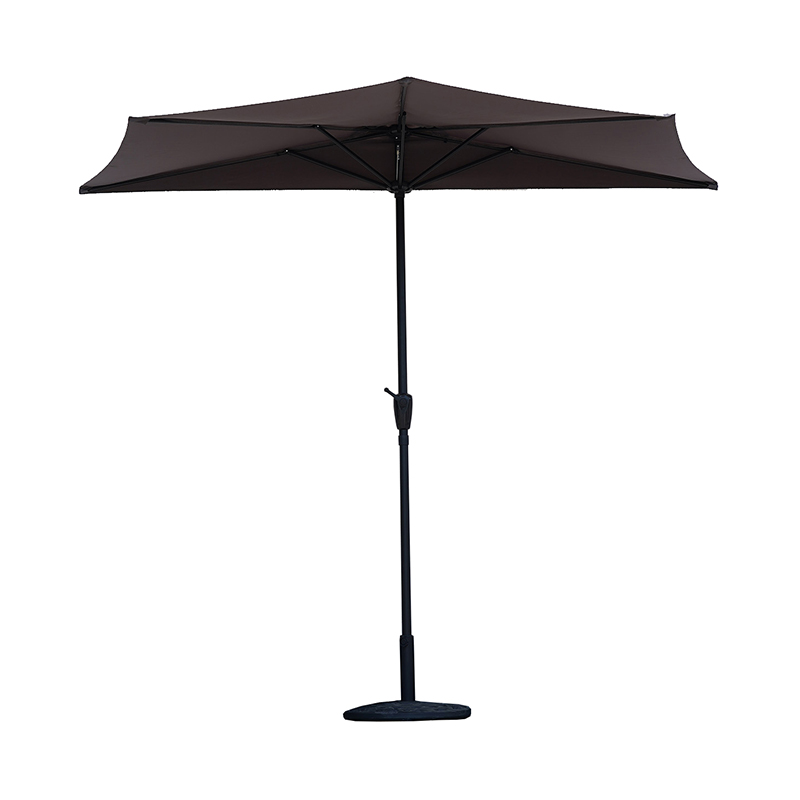
| Center-pole parasol | Pole beneath the canopy | Straightforward structure and operation | Individual dining tables |
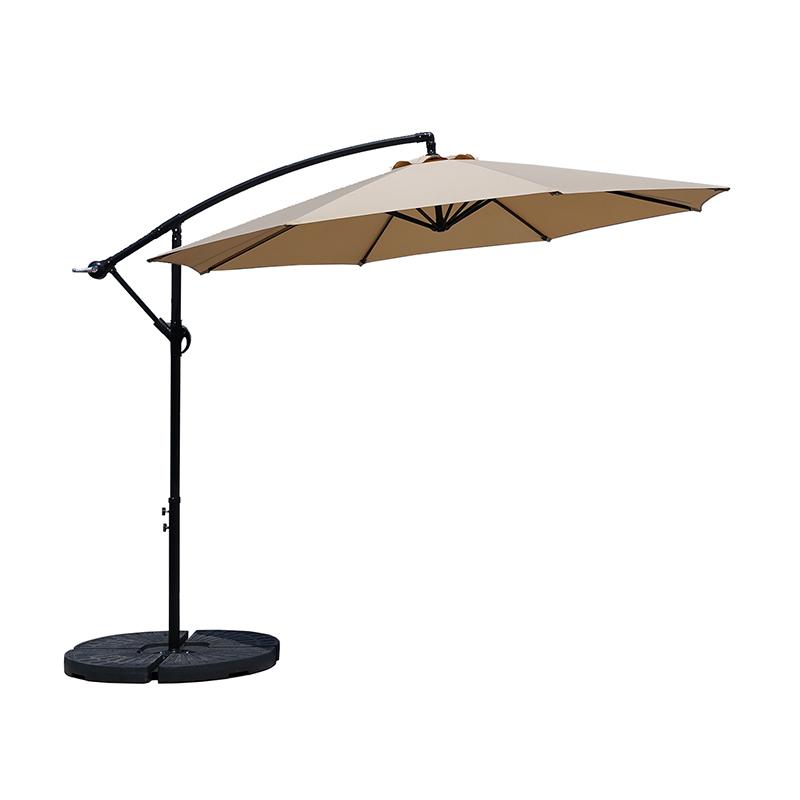
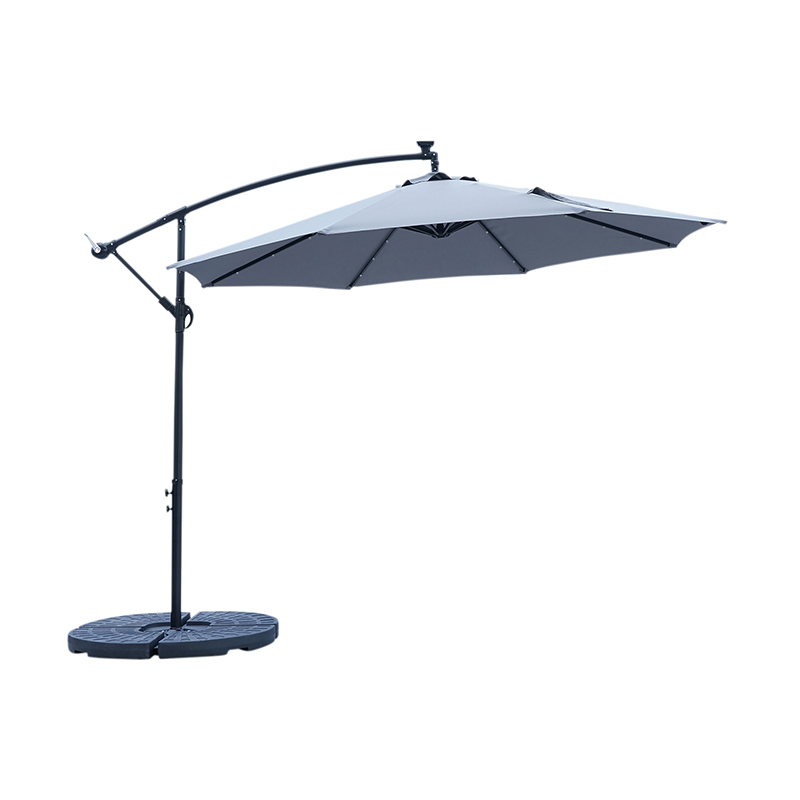
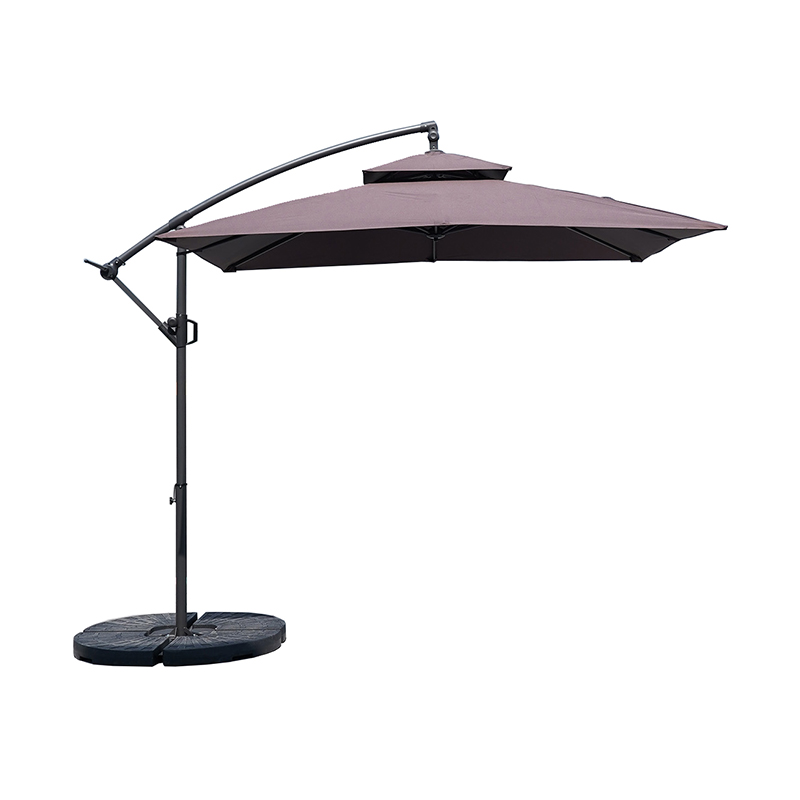
| Cantilever parasol | Offset supporting pole | Leaves the central seating area clear | Lounge areas |
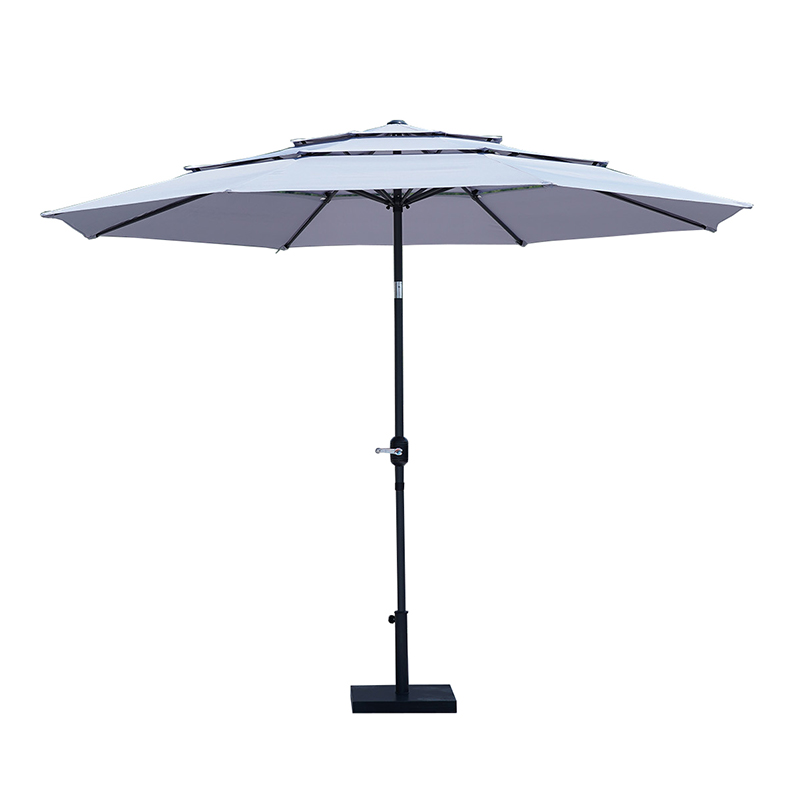
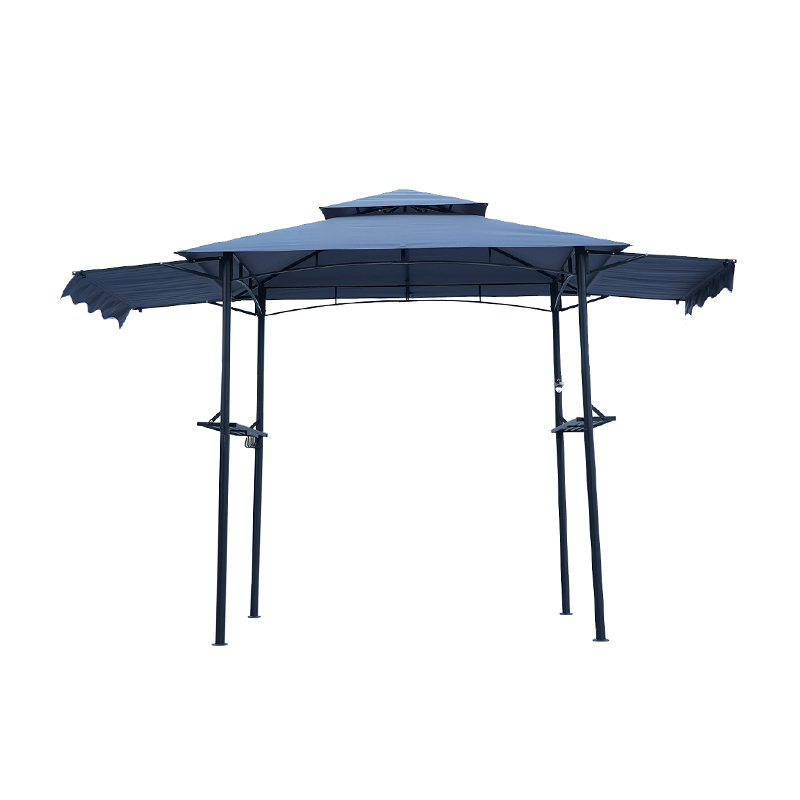
| Double-sided parasol | Two canopy sections on one structure | Covers a wider seating area | Long tables and grouped seating |
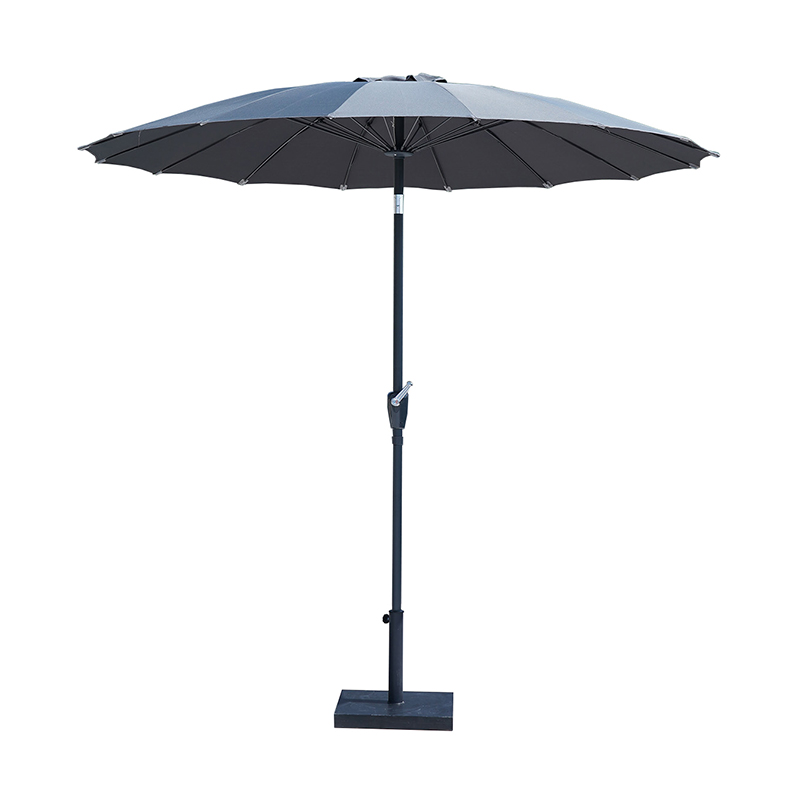
| Large commercial parasol | Reinforced frame with a larger canopy | Covers extensive areas | Hotels and restaurant terraces |
Cantilever models are useful where a central pole would interfere with furniture. Center-pole designs are often easier to arrange around individual tables.
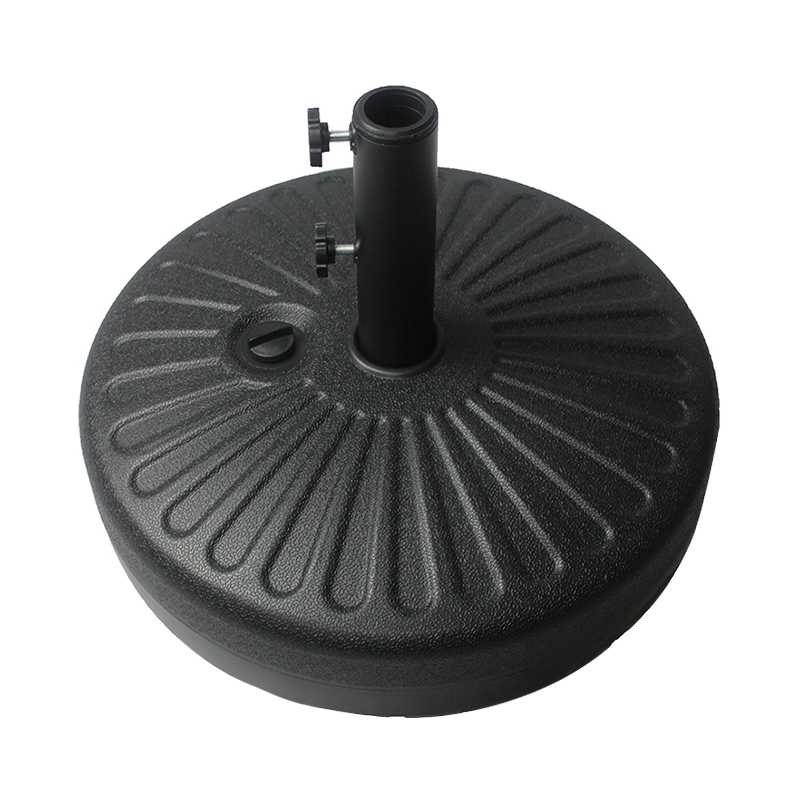
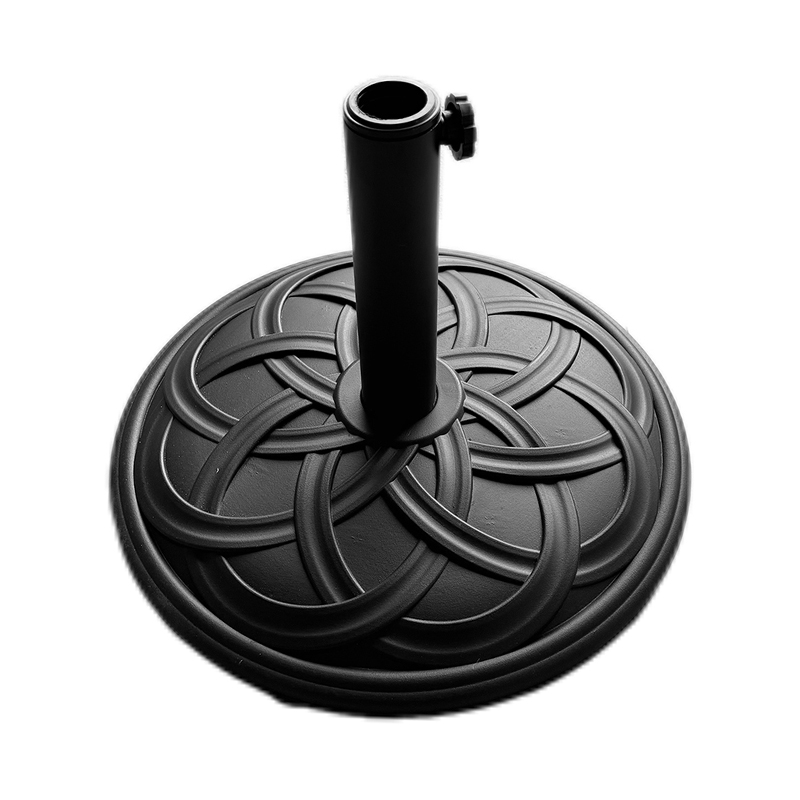
Larger canopies bring another consideration: wind loading. A bigger shade area requires a suitable frame, base, and anchoring arrangement. The available floor space and surface structure should be checked before selecting the model.
Wind Resistance and Installation Should Not Be Afterthoughts
Outdoor umbrellas catch wind much like sails. The larger the canopy, the greater the forces acting on its frame and base.
A heavy base alone doesn't guarantee stability, particularly on exposed terraces, rooftops, or elevated locations. Depending on the site, fixed anchoring may be necessary.
Check the frame strength, rib connections, pole dimensions, base design, and manufacturer's stated wind limitations. Also establish a clear closing procedure for strong winds and severe weather.
Restaurant employees should know when umbrellas need to be closed and secured. Hinges, fasteners, and fabric connections should be inspected regularly, especially after periods of bad weather.
Keeping the Same Look Across Multiple Restaurant Locations
Restaurant groups often want their terraces to follow the same visual style. Using different umbrella colors, frame finishes, or canopy designs at each location can make the overall brand presentation inconsistent.
OEM suppliers can offer several customization options:
For large orders, approve a physical sample before production. Keep a record of the fabric specification, color reference, frame finish, and dimensions. This becomes particularly useful when a restaurant opens another location or needs replacement umbrellas later.
Planning Orders, Installation, and Maintenance
The arrival of the umbrellas is only one part of the project. Large orders may require phased delivery, on-site assembly, lifting equipment, or coordination with other terrace work.
Before confirming the purchase, discuss production capacity, delivery dates, packaging, spare parts, and installation requirements with the supplier.
Once installed, the umbrellas need routine attention. Canopies should be cleaned according to the fabric manufacturer's instructions. Frames, joints, screws, and opening mechanisms need periodic checks for wear and corrosion.
It is also worth keeping spare ribs, connectors, and canopy fabric available. Replacing one damaged component is generally less disruptive than taking an entire umbrella out of service.
Making Outdoor Parasol Umbrellas Work for Large Restaurant Projects
The requirements of a large restaurant terrace are different from those of a small residential patio. Umbrellas need to provide enough shade without crowding the furniture or interfering with service routes. Their frames and anchoring systems must also suit the site's wind exposure.
When sourcing Outdoor Parasol Umbrella products for commercial projects, the important details are canopy dimensions, fabric performance, frame construction, base design, and available replacement parts. Getting these specifications settled before production begins makes large installations easier to coordinate and maintain.
Related Products
Contact Us for More Details
Don't hesitate to contact when you need us!
Contact Information
Add:
No.5-58(Building1&2in factory ) Kongao village, DatianDistrict, Linhai, Zhejiang, China
Phone:
+86-13958586110
Tel:
+86-576-89398116
E-mail:
Product Category
QR Code
Join our community and stay connected

Wholesale Outdoor Parasol Umbrella Factory

 English
 中文简体
 Español