2026-11-20
A patio umbrella can have a strong frame and a well-made canopy yet still become unstable because its base is too light or its mounting arrangement is unsuitable. This is particularly important for large cantilever umbrellas, where the canopy sits away from the supporting pole and places additional leverage on the base.
For hotels, restaurants, resorts and outdoor furniture brands ordering customized umbrellas, the base should be specified alongside the canopy and frame. Retrofitting a different mounting system after production can be expensive, especially when dozens of umbrellas are being installed across the same property.
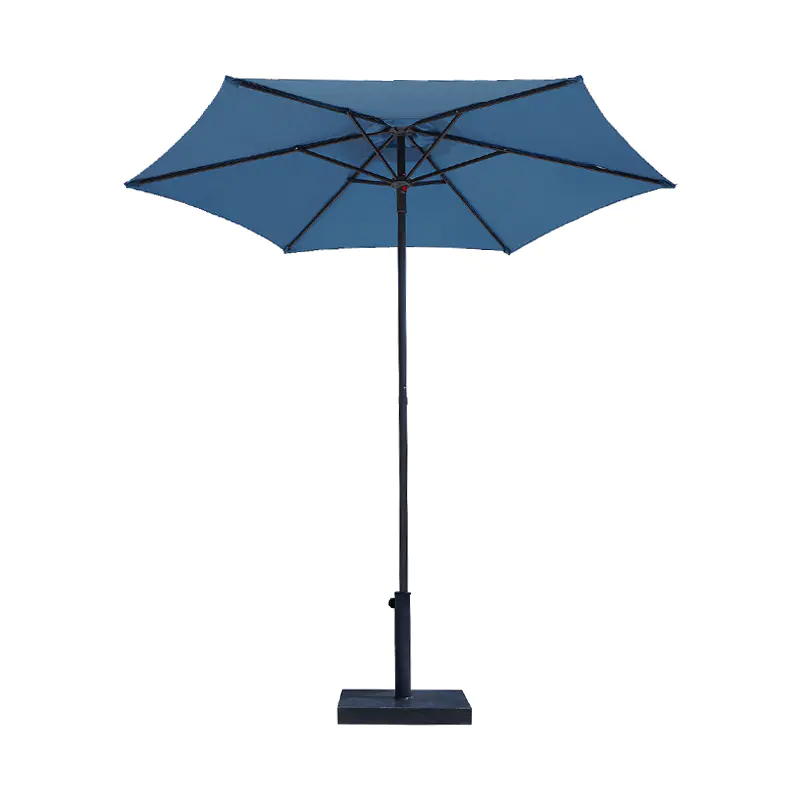
Start With the Umbrella Design and Installation Site
Canopy diameter is an obvious starting point, but it is not the only measurement that matters. Pole height, canopy shape, frame construction and opening mechanism also influence the loads transferred to the base.
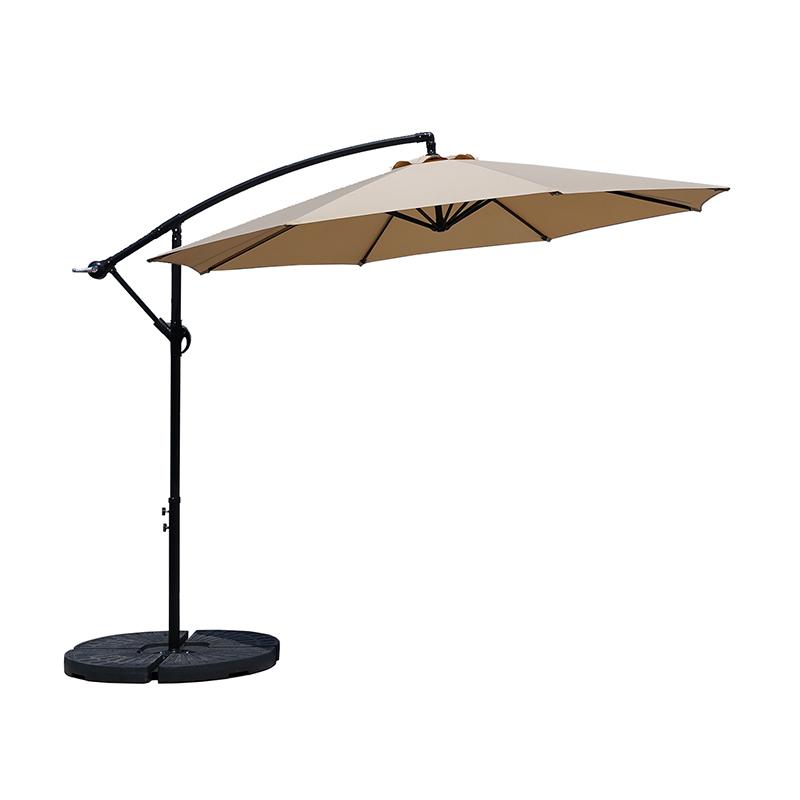
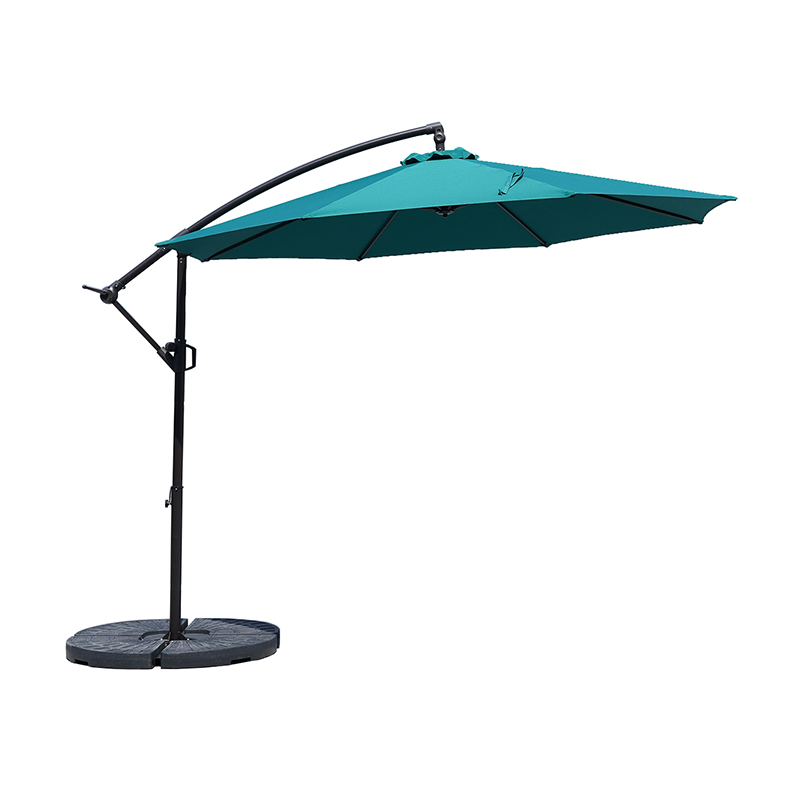
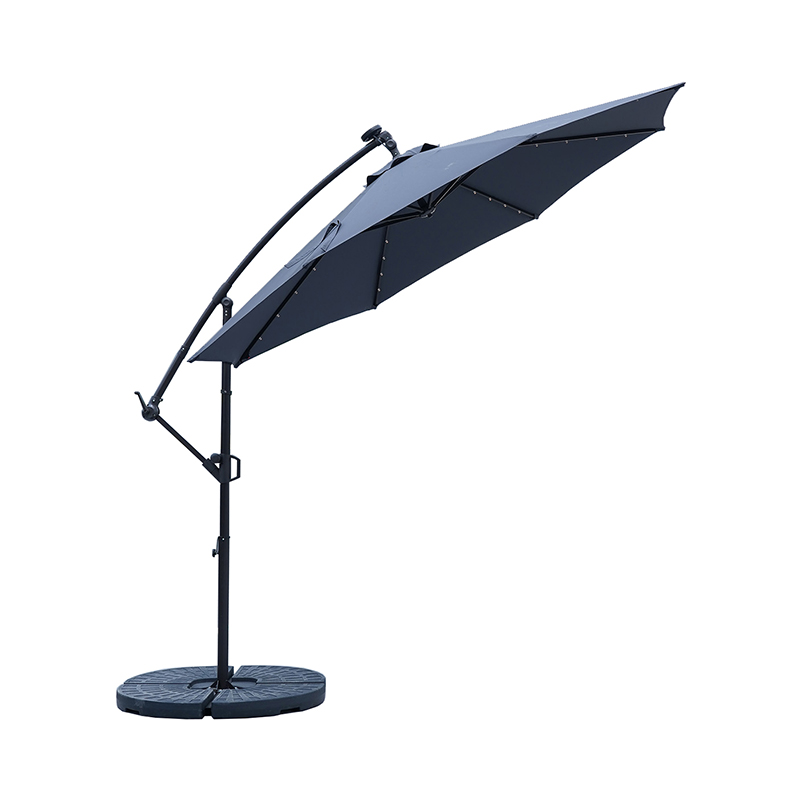
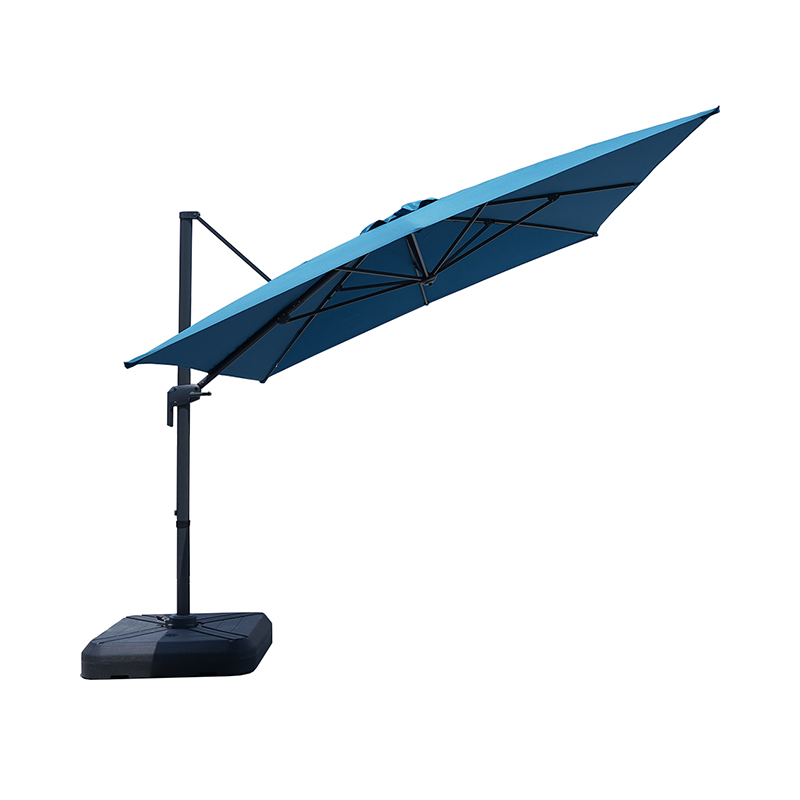
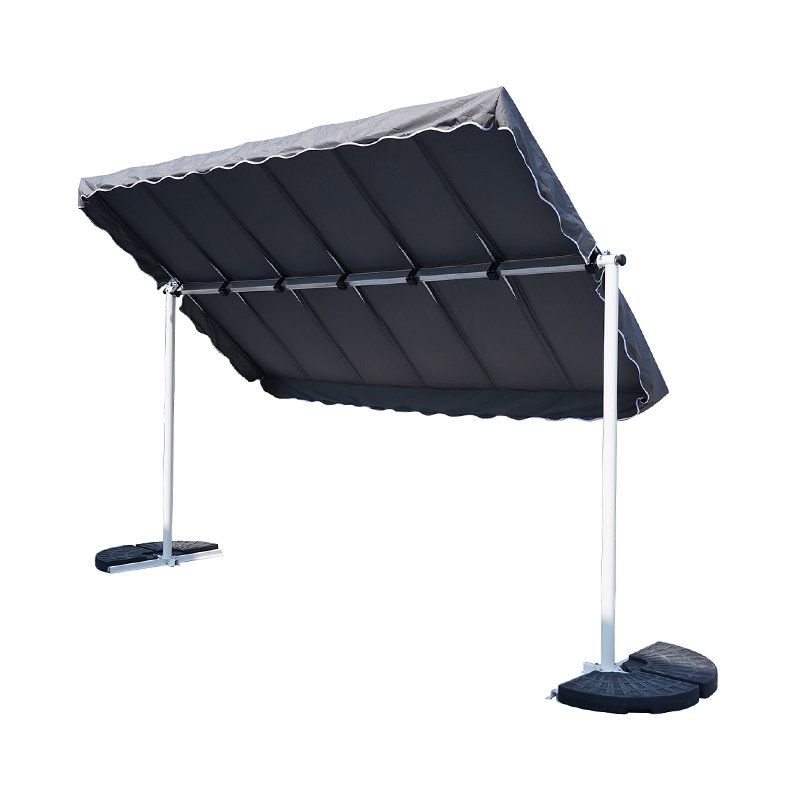
A center-pole umbrella distributes its weight around a relatively central support. A cantilever model has an offset canopy, which creates a turning force around its supporting structure. Two umbrellas with similar canopy dimensions may therefore require quite different base arrangements.
The installation location adds another variable. An umbrella on a sheltered restaurant terrace faces different conditions from one beside an exposed hotel swimming pool or on a coastal deck.
Before requesting a quotation, give the manufacturer the canopy dimensions, pole specifications and intended installation surface. Photos or site drawings are useful when the ground has unusual slopes, limited fixing space or nearby structures.
How Much Base Weight Is Actually Needed?
There is no universal base weight that works for every patio umbrella. The appropriate specification depends on canopy size, pole position, base footprint, wind exposure and the manufacturer's tested recommendations.
Cantilever umbrellas usually require more attention because the offset canopy creates additional leverage. Simply choosing a heavier version of a conventional center-pole base may not provide the correct support.
Ask the manufacturer to confirm:
Weight alone does not make an umbrella windproof. Even a heavy base cannot guarantee stability during strong gusts. Commercial operators should have clear procedures for closing and securing umbrellas when weather conditions become unsuitable.
Which Mounting System Fits the Installation?
The choice between a movable base and a permanent fixing arrangement usually depends on how the outdoor space is used.
| Mounting system | Typical application | Main specification considerations |
|---|---|---|
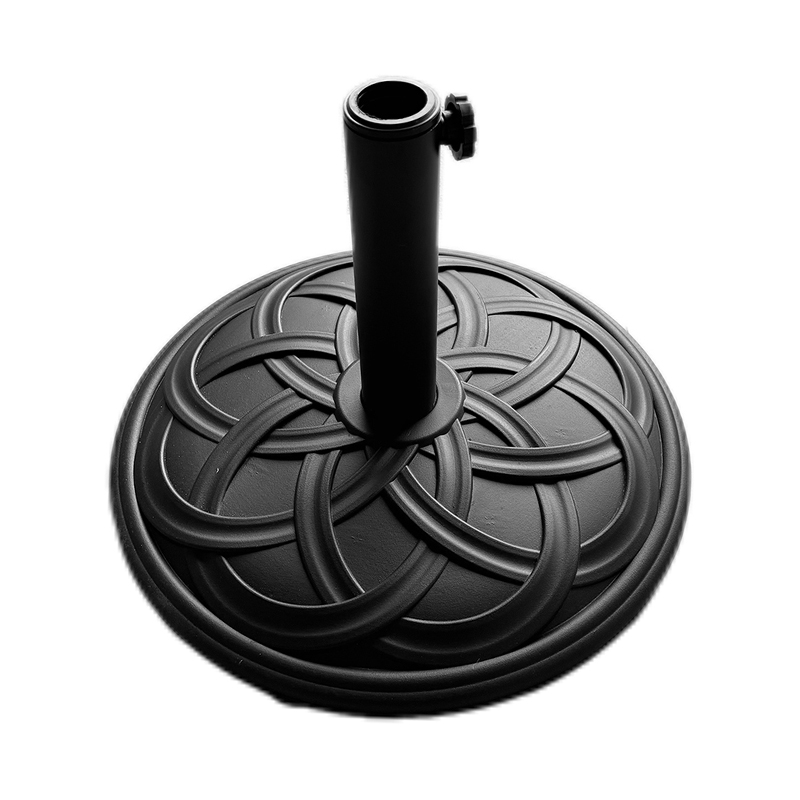
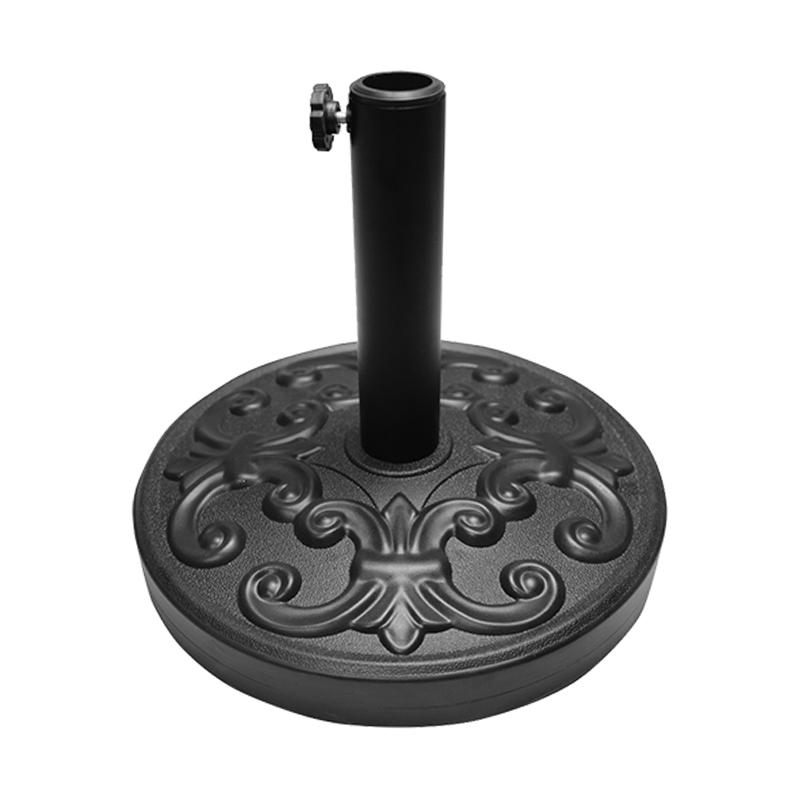
| Freestanding weighted base | Patios and flexible seating areas | Base weight, footprint and pole compatibility |
| Cross base with separate weights | Commercial terraces and larger umbrellas | Weight distribution, locking points and weight plates |
| In-ground sleeve | Permanent outdoor installations | Sleeve depth, drainage and ground conditions |
| Surface-mounted plate | Concrete terraces and fixed decks | Anchor type, fastener layout and substrate strength |
| Deck or railing mount | Space-limited balconies and decks | Structural support, clamp compatibility and clearance |
A freestanding base is convenient for restaurants that rearrange tables regularly. An in-ground sleeve may be more appropriate for a resort where umbrellas remain in designated positions throughout the season.
Surface-mounted plates require particular care. The concrete, timber deck or other supporting structure must be strong enough to carry the expected loads. Attaching a bracket to a weak deck board does not make the installation secure.
Check the Connection Between the Pole and Base
Even a heavy base can be unsuitable if its pole connection is incorrect.
Manufacturers need the pole diameter, cross-sectional shape, insertion depth and locking arrangement. Some bases use adjustable locking knobs, while others require specific sleeves or adapters.
For cantilever models, the connection deserves additional attention because the supporting structure experiences forces different from those of a conventional upright umbrella. Buyers should confirm that the base is approved for the exact frame configuration rather than relying on a matching pole diameter alone.
For customized orders, request a dimensional drawing showing the pole receiver, fixing points and relevant clearances. This is especially useful when the umbrella frame and base are being supplied by different manufacturers.
Material Selection for Outdoor Exposure
Bases and mounting fittings remain outdoors for long periods, so their material and finish affect maintenance requirements.
Concrete and stone-filled bases provide substantial mass and are commonly used where portability is less important. Steel offers structural strength but needs suitable corrosion protection. Aluminum is lighter and can be useful for movable mounting components, although its dimensions and construction must suit the applied loads.
Fasteners also deserve attention. Stainless steel hardware can be useful in humid or coastal locations, but the appropriate grade should be selected according to salt exposure and other environmental conditions.
Drainage is easy to overlook. Water trapped inside a base or around mounting hardware can cause staining, corrosion or freeze-related damage in colder climates. Ask how the base handles rainwater and what maintenance the finish requires.
Information to Include in a Custom Order
A drawing and a complete specification sheet can prevent misunderstandings between the umbrella manufacturer and installation contractor.
For each model, provide the canopy dimensions, pole diameter, umbrella type, base arrangement and installation surface. State whether the product will be used in a sheltered courtyard, open terrace or exposed outdoor area.
Also clarify whether the base must be movable, whether additional weights will be supplied, and whether the mounting hardware needs to match existing furniture or deck fittings.
Before bulk production, review a sample or engineering drawing. For large commercial umbrellas or permanent installations, the anchoring arrangement should be assessed by a qualified professional familiar with the site structure and applicable local requirements.
Specify the Base Before Production Begins
The base should not be treated as an accessory chosen after the umbrella itself. Canopy geometry, pole construction, mounting hardware and installation conditions all affect the support requirements.
When ordering a Custom Outdoor Patio Umbrella, provide the manufacturer with the actual site conditions and request recommendations for the complete mounting arrangement. Confirming these details before production helps avoid mismatched components, installation delays and costly changes once the umbrellas arrive on site.
Related Products
Contact Us for More Details
Don't hesitate to contact when you need us!
Contact Information
Add:
No.5-58(Building1&2in factory ) Kongao village, DatianDistrict, Linhai, Zhejiang, China
Phone:
+86-13958586110
Tel:
+86-576-89398116
E-mail:
Product Category
QR Code
Join our community and stay connected

Wholesale Outdoor Parasol Umbrella Factory

 English
 中文简体
 Español