2026-10-09
Patio umbrellas spend a lot of time outside, so sooner or later they have to deal with wind. On a calm day, almost any well-made umbrella can look sturdy. Once the wind picks up, though, the weak points can show pretty quickly. The canopy, ribs, pole, joints, and base can all come under extra stress.
For homeowners, restaurants, hotels, resorts, and other commercial outdoor spaces, this makes wind resistance something worth checking before buying. People are paying more attention to how an Umbrella Shade for Patio behaves when the weather changes, especially when the umbrella is going to stay outdoors for long periods.
For B2B buyers, there is more to this than simply avoiding damage. Wind performance can affect maintenance work, customer complaints, product returns, and how long the umbrella remains usable. The trick is finding a design that provides enough shade without making the structure difficult to operate or install.
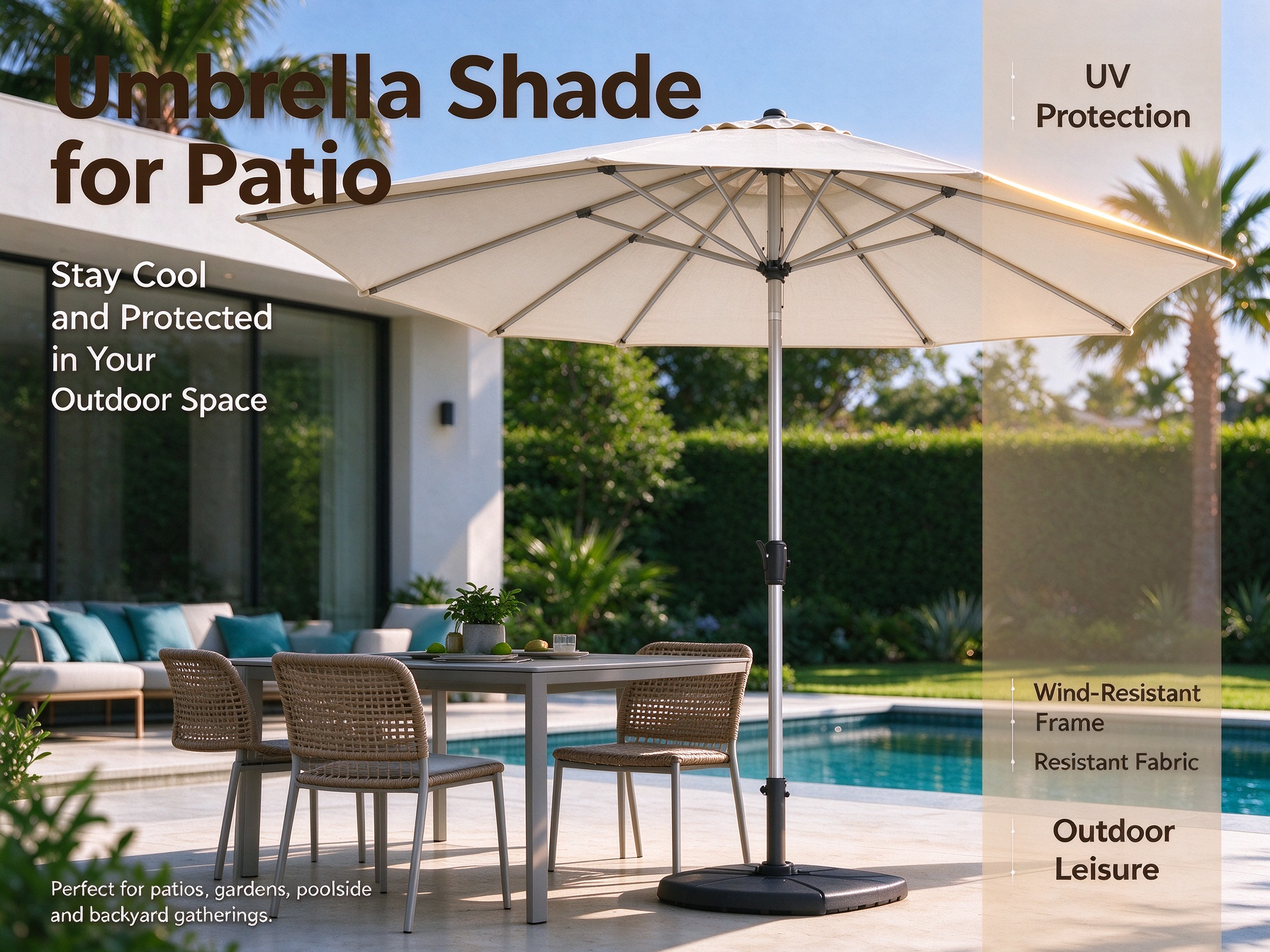
A patio umbrella is there to provide shade, but once wind gets underneath or across the canopy, the umbrella starts acting a bit like a sail. The bigger the canopy, the more surface area there is for moving air to push against.
That force doesn't stay in one place.
The canopy transfers some of the load to the ribs. The ribs connect to the hub, the hub transfers force to the pole, and eventually that force reaches the base or anchoring system.
For a homeowner, the result could be an umbrella tipping over or a bent component. In a restaurant or hotel, there may be dozens of umbrellas being opened and closed by staff every day. A small structural issue can become a repeated maintenance problem.
So wind resistance isn't really about making one part stronger. The whole umbrella needs to work together.
There are several details that can make a difference when an umbrella is exposed to moving air.
The canopy, ribs, pole, joints, and base all have a role. Depending on the application, a manufacturer may change the materials, tube dimensions, connection points, or reinforcement.
Some common features include:
But don't look at one feature and assume the umbrella will automatically handle strong wind. A vented canopy doesn't fix a weak base, and a heavy pole won't help much if the mounting connection is poorly designed.
The complete structure matters.
Canopy size is an obvious specification when comparing patio umbrellas, but it also has a direct connection with wind exposure.
A larger canopy covers more space, which is useful for restaurant tables, poolside seating, resort patios, and commercial terraces. At the same time, that larger surface gives moving air more area to push against.
So there is a practical trade-off here.
You want enough shade for the seating area, but you also need a structure that makes sense for the location where it will be installed.
| Canopy size | Typical use | Wind-related consideration |
|---|---|---|
| Small | Balcony, small patio table | Lower overall surface area |
| Medium | Residential patio, café table | Balance coverage and stability |
| Large | Restaurant or resort seating | Greater structural and anchoring requirements |
| Extra-large | Commercial outdoor areas | Site conditions and engineering become especially important |
These are general categories. Actual umbrella sizes, frame designs, and installation requirements can vary from one manufacturer to another.
Some patio umbrellas have vents built into the canopy. The basic idea is simple: give some of the air a way through instead of letting it build up underneath the canopy.
This can be useful when wind is moving across the umbrella.
Still, a vent isn't a magic solution. If the base is too light, the pole connection is weak, or the umbrella is being used outside its recommended conditions, the structure can still move or tip.
When sourcing umbrellas, it makes more sense to look at the vent together with the rest of the design. Check the frame, pole, base, canopy material, and operating instructions as a group.
The frame plays a big role in how the umbrella behaves under load.
Aluminum is common because it keeps the structure relatively light and offers good resistance to outdoor corrosion. Steel provides another combination of stiffness and weight, depending on the construction and surface treatment.
But material alone doesn't tell you much.
Tube dimensions, wall thickness, rib shape, fasteners, joints, and connection methods can all affect the actual strength of the frame.
A lightweight aluminum frame may work well for a residential patio, while a commercial installation with a large canopy may call for a different structure and more reinforcement.
For B2B buyers, it is better to ask for the actual material and construction details than to rely on descriptions such as “heavy-duty.”
The pole carries the canopy structure and transfers the forces down toward the base. Its diameter, wall thickness, material, and connection method all matter.
Then there are the joints.
Wind doesn't necessarily put the same amount of force on every part of the umbrella. Hinges, ribs, sliders, hubs, and other moving connections can experience repeated movement. Over time, looseness or wear may appear if these parts aren't designed for the intended use.
This is one reason sample testing can be useful for OEM and private-label projects.
Open and close the umbrella several times. Check the joints. Look for unusual movement or poor alignment. These things aren't always obvious in a product photo or specification sheet.
The base is easy to overlook during product sourcing.
A strong frame doesn't help much if the umbrella is sitting on a base that isn't suitable for its size or installation location.
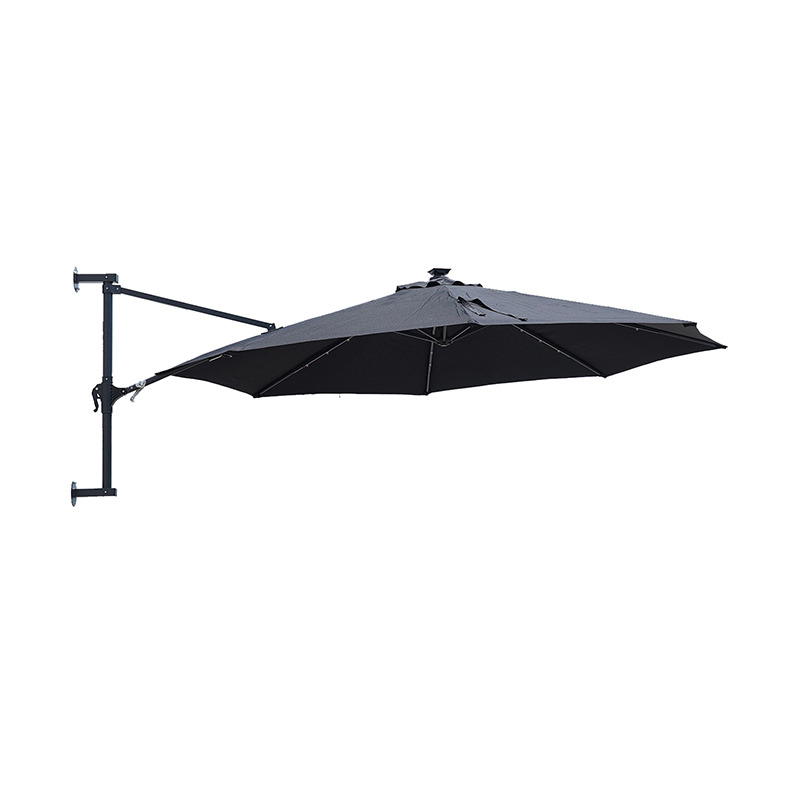
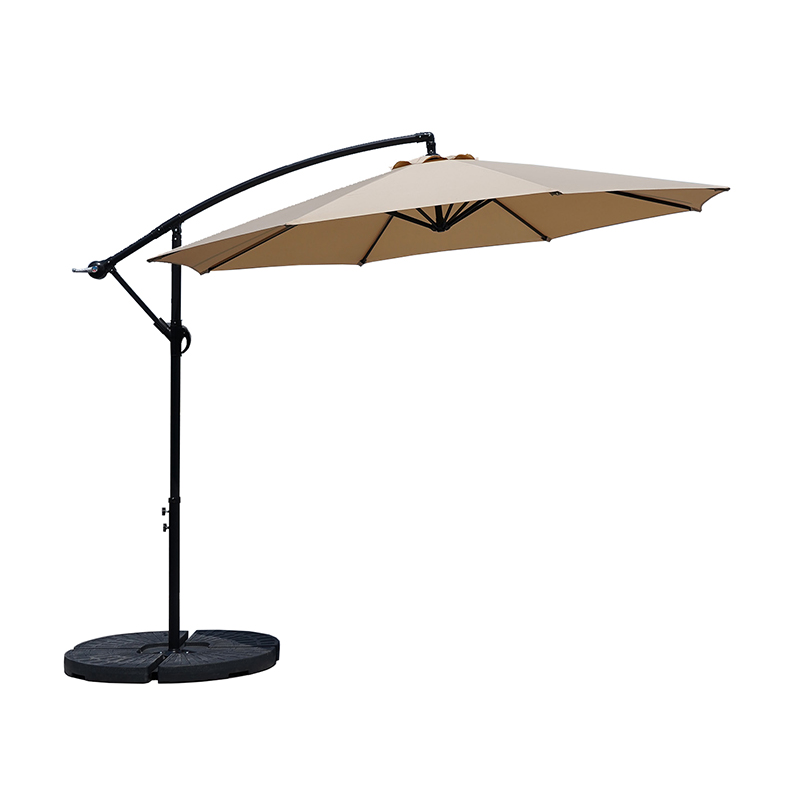
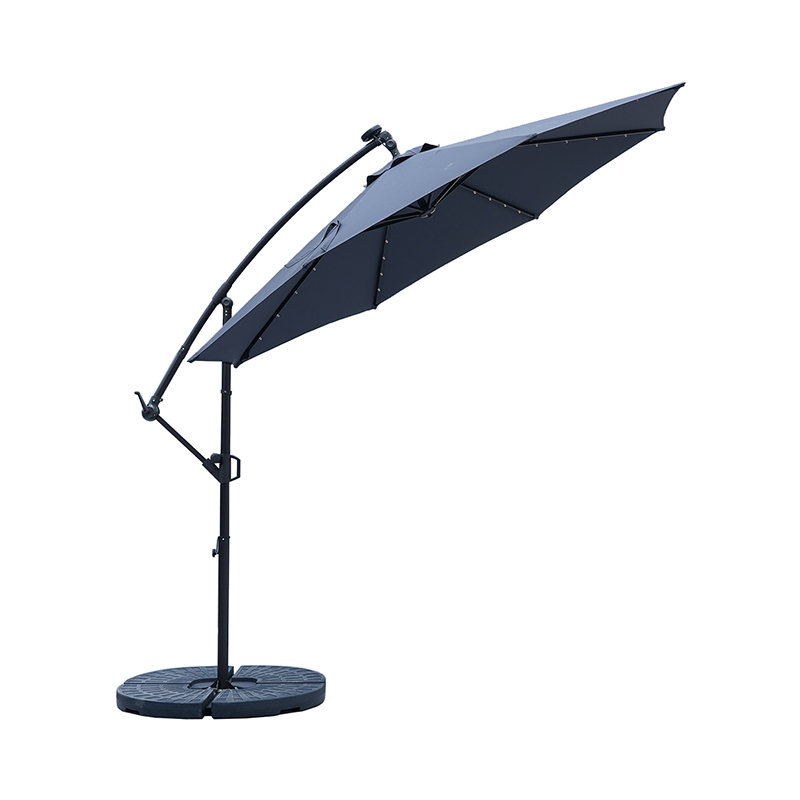
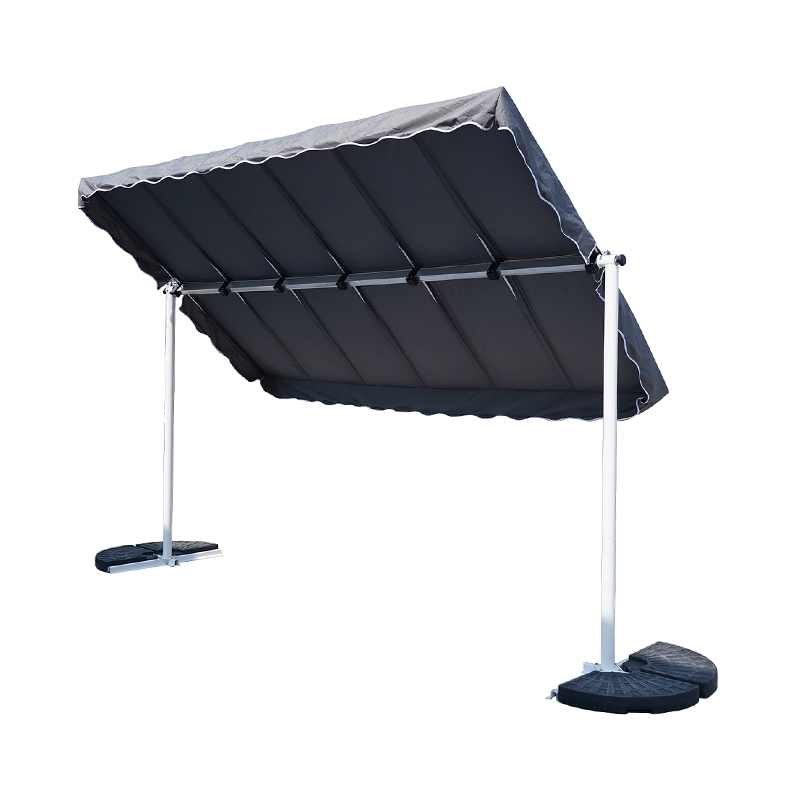
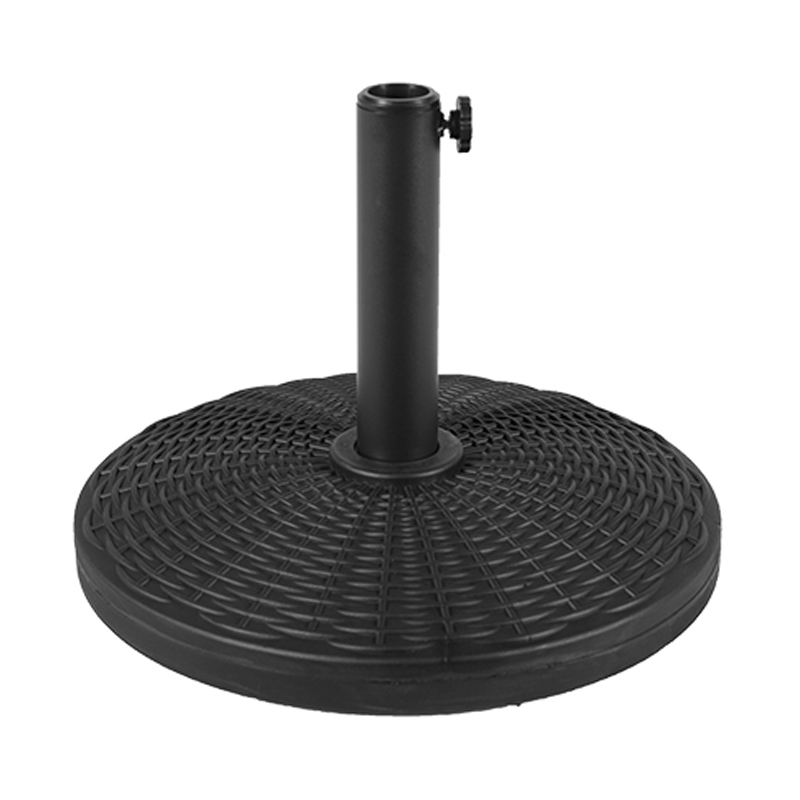
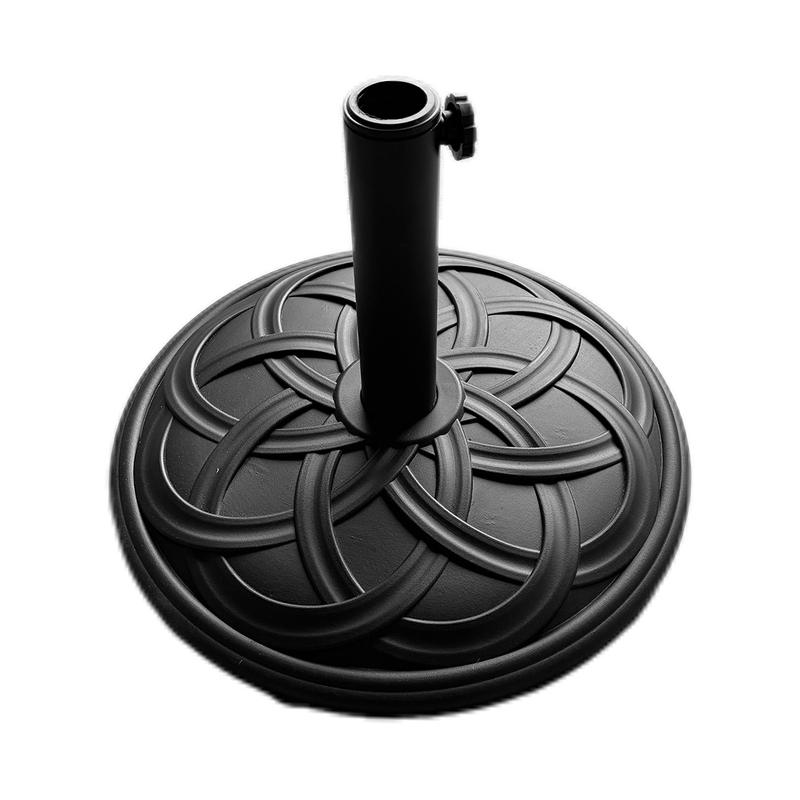
The right base depends on the canopy, pole dimensions, surface, and intended use. A small residential umbrella might use a portable weighted base. A large commercial umbrella may need a heavier system or fixed anchoring.
Restaurants and hotels may prefer fixed or semi-permanent mounting where umbrellas are used every day. Portable bases make more sense when the outdoor layout needs to change regularly.
The site matters too. An umbrella on a sheltered patio doesn't face the same conditions as one installed beside the ocean or on an open rooftop.
Wind exposure can vary a lot from one location to another.
A backyard surrounded by walls and buildings may be relatively sheltered. An open restaurant terrace, rooftop, beachfront property, or pool deck can be much more exposed.
For commercial buyers choosing an Umbrella Shade for Patio, the installation environment should be part of the product discussion.
Some things worth checking include:
The same umbrella can behave differently in two different locations. That's why the manufacturer's operating instructions shouldn't be ignored once the product has been purchased.
A stronger umbrella still needs regular care.
Outdoor products deal with sunlight, rain, dust, temperature changes, and repeated opening and closing. Over time, these conditions can affect the fabric, fasteners, hinges, ribs, and other components.
For a commercial property, maintenance needs to be simple enough that staff will actually do it.
Basic procedures might include checking fasteners, cleaning the canopy, looking over the ribs, checking the base connection, and closing the umbrella when weather conditions are unsuitable.
For hotels and restaurants with multiple umbrellas, a quick inspection before opening the outdoor area can help catch loose parts or other issues before customers arrive.
When buying in volume, try to ask questions that relate to the actual application instead of relying on general product descriptions.
For example:
What materials are used for the pole and ribs?
How is the canopy connected to the frame?
Does the canopy have a vent?
What base options are available for different canopy sizes?
What weather conditions is the umbrella designed to operate in?
How are the structural components tested?
Can samples be provided before the bulk order?
These questions make the conversation with a supplier much more useful.
A manufacturer familiar with commercial projects should also be able to explain why a particular frame, canopy size, or base is being recommended for a specific installation.
Testing can tell manufacturers and buyers a lot, but the test conditions need to be clear.
Depending on the product, a manufacturer may check structural behavior under controlled wind conditions, look for deformation, inspect the frame after exposure, or test joints through repeated movement.
For B2B buyers, it helps to ask for details such as:
A wind-speed number on its own doesn't necessarily tell you how the test was performed.
For projects involving public areas or commercial installations, buyers should also check local safety, building, and installation requirements. These can vary depending on the location and type of site.
For private-label and commercial orders, customization can go beyond adding a logo.
Depending on the factory, buyers may be able to customize canopy dimensions, fabric, frame finish, pole dimensions, vent design, base style, opening mechanism, and color.
This can be useful for hospitality businesses with different outdoor layouts. A hotel may need several umbrella sizes for different areas, while a restaurant may want the same fabric and frame appearance across several locations.
One thing to watch is structural changes.
Changing the canopy size, pole dimensions, or frame geometry can affect how the umbrella behaves in wind. If a major structural change is requested, buyers should ask for updated drawings and technical information instead of assuming the original specifications still apply.
When comparing suppliers, don't focus on one feature. Look at the complete umbrella.
| Evaluation area | What buyers should compare |
|---|---|
| Canopy | Size, fabric, vent design, attachment method |
| Frame | Material, rib construction, joints |
| Pole | Diameter, wall thickness, finish |
| Base | Weight, anchoring options, surface compatibility |
| Operation | Opening system and ease of closure |
| Maintenance | Cleaning, replacement parts, inspection |
| Testing | Test method and documented conditions |
| Customization | Available sizes, finishes, fabrics, branding |
This makes supplier comparisons more practical. Instead of simply asking which umbrella is “stronger,” buyers can compare the actual components and conditions that matter for their project.
For many outdoor applications, wind resistance is becoming a more relevant part of the buying discussion. Buyers are not only thinking about shade on a sunny day anymore. They also want to know what happens when the weather changes.
Still, wind performance shouldn't be looked at separately from everything else.
Canopy size, frame construction, pole strength, base design, installation method, operating habits, and local weather conditions all affect how the umbrella performs.
For commercial buyers, the practical goal is to choose a design that fits the actual site and comes with clear operating requirements.
Wind-resistant construction can be useful for an Umbrella Shade for Patio, particularly in restaurants, hotels, resorts, pool decks, and other exposed outdoor areas. But adding a heavier frame alone doesn't automatically solve every wind-related problem.
The canopy, ribs, pole, joints, and base all need to work together. The installation site matters too.
For B2B buyers, it makes sense to start with the actual application. Look at where the umbrella will be installed, how large the shaded area needs to be, how often it will be used, and what kind of weather it may face.
From there, buyers can compare materials, structural details, test information, base options, and customization possibilities with the manufacturer. That gives a much clearer picture of whether the umbrella is actually suited to the job, instead of judging it only by its appearance or a short product description.
Related Products
Contact Us for More Details
Don't hesitate to contact when you need us!
Contact Information
Add:
No.5-58(Building1&2in factory ) Kongao village, DatianDistrict, Linhai, Zhejiang, China
Phone:
+86-13958586110
Tel:
+86-576-89398116
E-mail:
Product Category
QR Code
Join our community and stay connected

Wholesale Outdoor Parasol Umbrella Factory

 English
 中文简体
中文简体
 Español