2026-10-02
For hotels, restaurants, cafés, resorts, shopping centers, and event venues, an outdoor parasol umbrella is not just something placed outside for shade. Its size, shape, pole position, opening system, and base all affect how useful it is once customers and furniture are actually around it.
A small café terrace with a few tables has very different needs from a hotel pool deck. A large restaurant patio has its own problems, too. Simply choosing a bigger umbrella does not automatically solve the shade issue. There may not be enough room for the canopy, the base may get in the way, or customers may have trouble moving around it.
For wholesalers, distributors, hospitality suppliers, and other B2B buyers, it makes more sense to start with the space itself. This article looks at how Outdoor Parasol Umbrella sizes and shapes can work in different commercial settings and what should be checked before an order is placed.
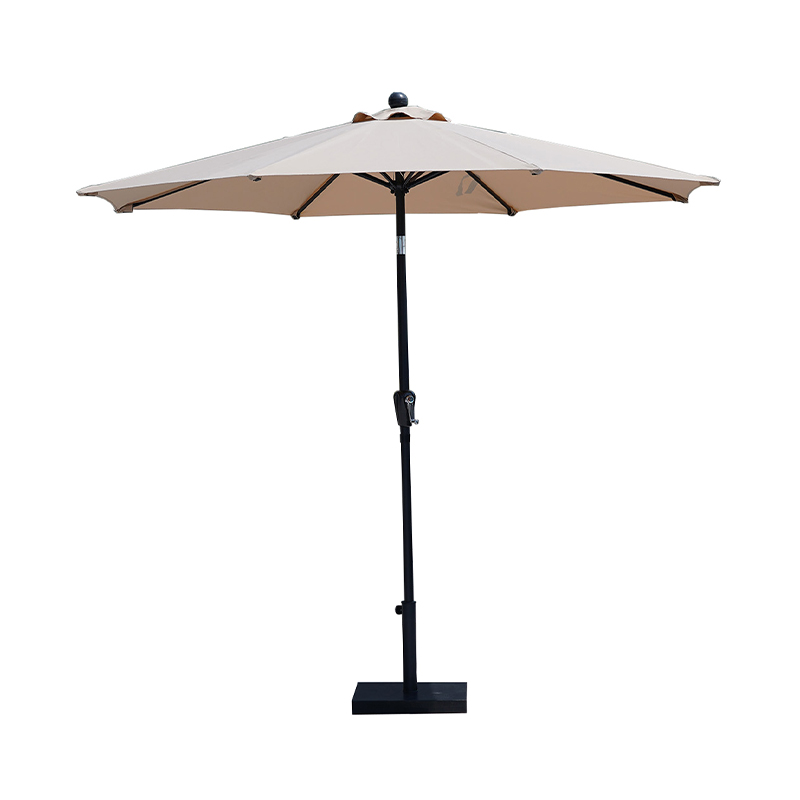
Commercial outdoor areas usually have to do several jobs at once. Customers need shade, tables and chairs need enough room, staff need clear paths, and the umbrellas need to stay stable.
The canopy size determines how much area can be shaded. The shape affects where that shade actually falls.
For example, a square parasol can fit nicely with tables arranged in rows. A round umbrella may feel more natural around one small table. A rectangular canopy can be useful when the seating area is long and narrow.
So, there is no single size or shape that works for every commercial space. The furniture layout is a good place to start.
Commercial umbrellas are available in several common shapes, each with slightly different advantages.
| Umbrella shape | Typical commercial use | Main consideration |
|---|---|---|
| Round | Café tables, poolside seating | Shade spreads around the center |
| Square | Restaurant patios, outdoor dining | Easy to line up with furniture |
| Rectangular | Long tables, narrow terraces | Makes better use of long spaces |
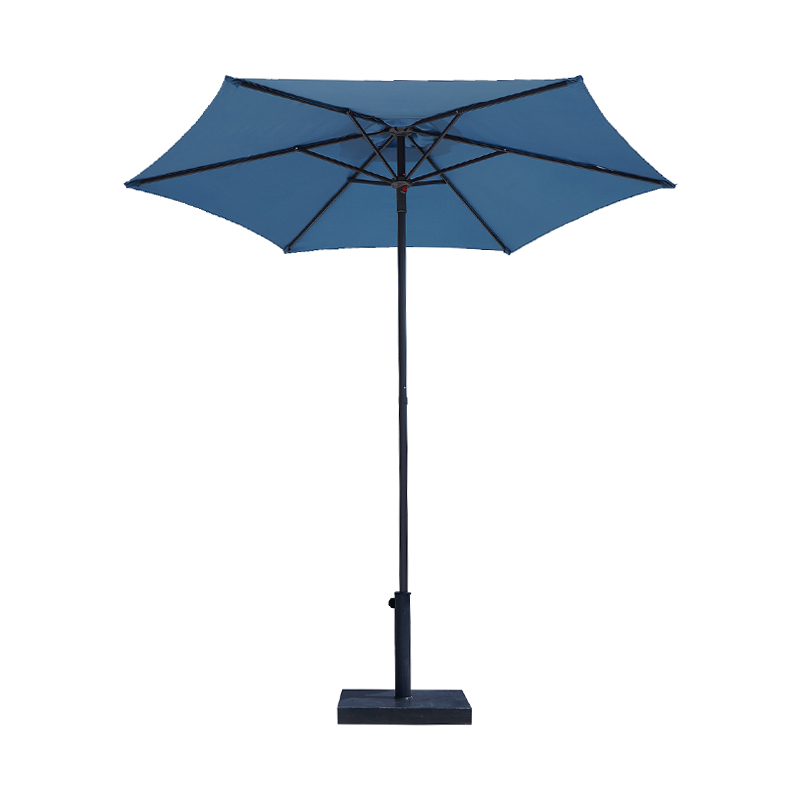
| Hexagonal or custom | Hospitality and decorative areas | Useful for unusual layouts |
These are only general guidelines. The actual choice still depends on the size of the furniture, available floor space, mounting method, and local conditions.
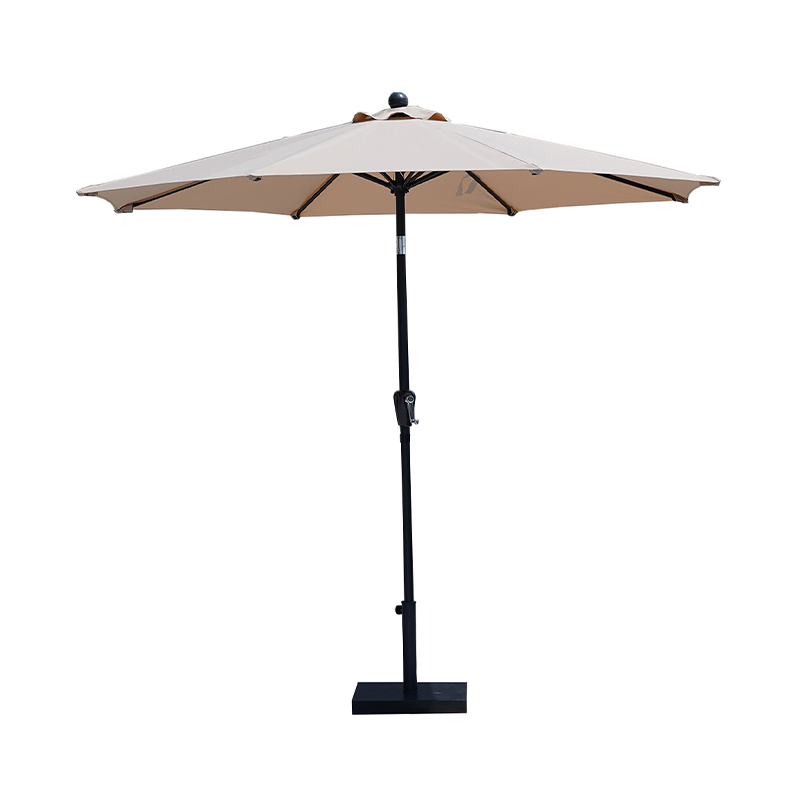
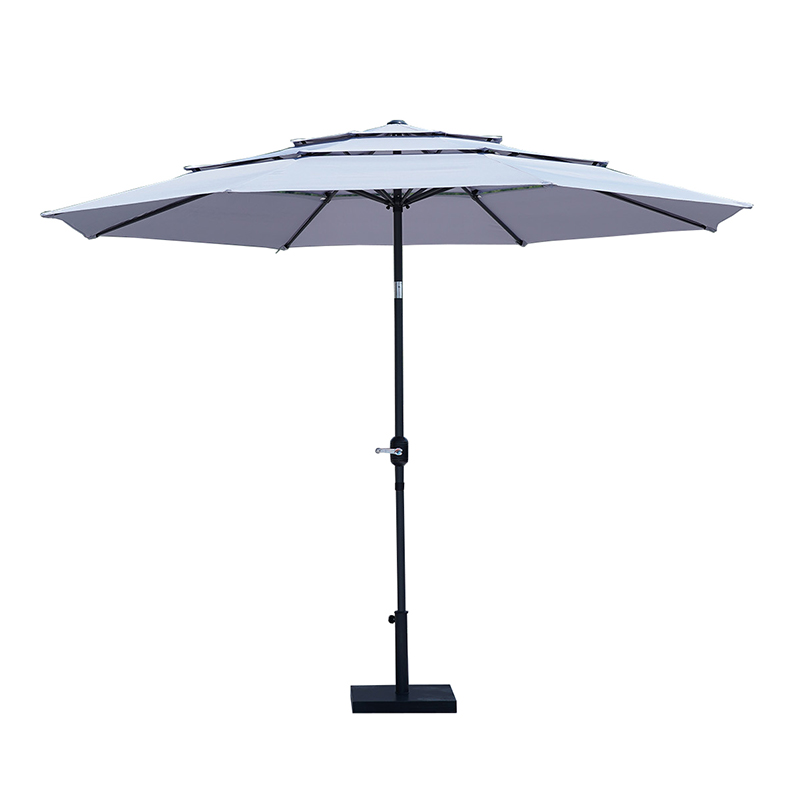
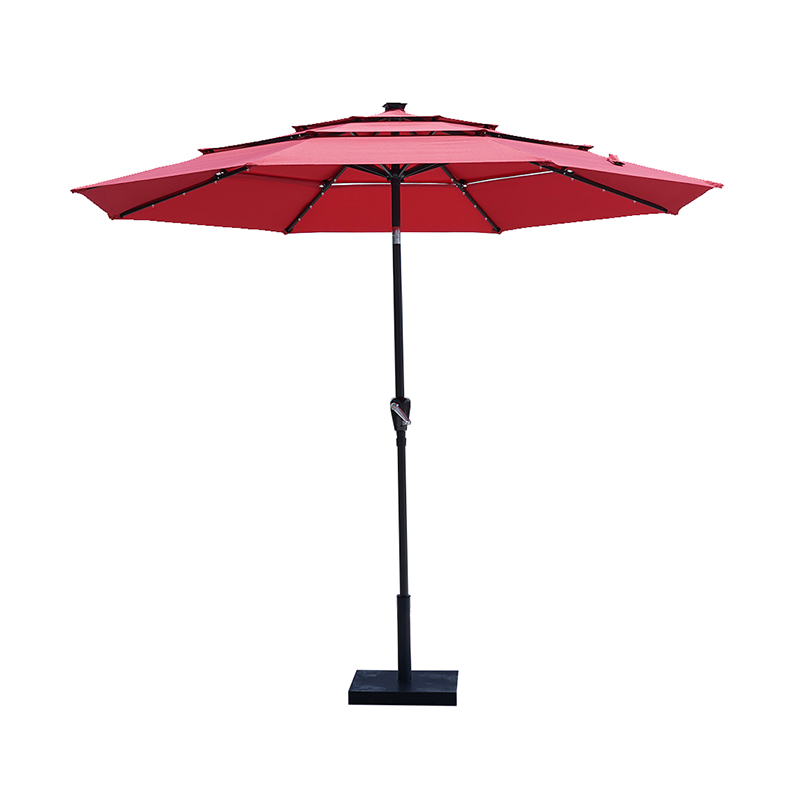
Round umbrellas are probably one of the easiest designs to recognize. They are commonly seen at cafés, restaurants, hotel terraces, and poolside seating areas.
The circular canopy spreads shade around its center, which works well with a round or square table. There are also no corners sticking out toward nearby tables or walkways, which can be helpful when space is limited.
The main thing is to match the canopy diameter with the table.
A small canopy over a large table may leave some customers sitting in direct sunlight. On the other hand, an oversized canopy can take up valuable space and interfere with nearby seating.
For commercial buyers, it is worth measuring the umbrella when fully opened, not just looking at the table underneath it.
Square umbrellas are often a practical choice for restaurants and cafés with several outdoor tables.
Their straight sides make it easier to line them up with tables, chairs, walls, and other umbrellas. If a patio uses a fairly regular grid layout, square canopies can make the whole arrangement easier to plan.
They can also create a consistent look across a larger dining area. This matters for hotels and restaurants where the outdoor furniture is part of the overall property design.
That said, a square canopy still needs enough clearance around its corners. A neat-looking layout on paper can feel quite crowded once chairs are pulled out and customers start moving around.
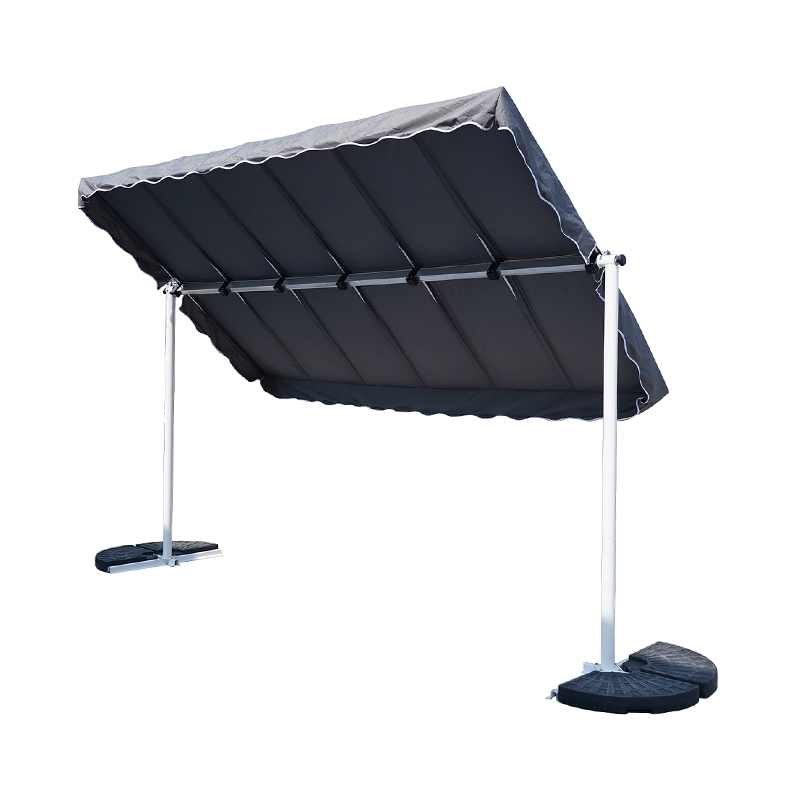
Rectangular umbrellas can be particularly useful where the outdoor space is longer than it is wide.
Typical applications include:
The shape lets the canopy follow the furniture instead of leaving a lot of unused shaded space at the ends.
For example, if a restaurant has one long dining table, a rectangular umbrella may make more sense than putting several small round umbrellas over it.
The direction matters as well. When possible, the longer side of the canopy should follow the longer side of the furniture arrangement.
Small commercial spaces can actually be harder to plan.
A café terrace may have enough room for the table and umbrella, but what happens when someone pulls out a chair? Can a waiter walk behind them? Does the umbrella base block the path? Is there enough room between two neighboring canopies?
These details are easy to miss when buyers only look at canopy dimensions.
Before choosing an Outdoor Parasol Umbrella, check:
It is better to look at the complete layout before deciding on the canopy size.
Hotels, resorts, large restaurants, and event venues often have much more outdoor seating to cover.
In these cases, buyers can either use larger umbrellas or arrange several medium-sized umbrellas across the area.
A large umbrella can cover more seating with fewer poles. That can be useful for an open pool deck or lounge area. Multiple umbrellas, however, give the operator more flexibility. Different seating zones can have their own shade, and the layout can sometimes be changed more easily.
| Commercial space | Possible umbrella approach |
|---|---|
| Small café terrace | Small or medium round/square umbrella |
| Restaurant patio | Several square or rectangular umbrellas |
| Hotel pool deck | Larger round, square, or rectangular models |
| Outdoor bar | Compact or narrow rectangular canopy |
| Resort seating area | Large umbrellas or grouped layouts |
| Event venue | Multiple coordinated sizes and shapes |
There is no need to cover every square meter with one huge canopy. Sometimes several appropriately sized umbrellas are simply easier to manage.
A central pole is not ideal for every type of seating.
If the pole sits in the middle of a table, it can be annoying. It can also take up useful space between outdoor sofas or lounge chairs.
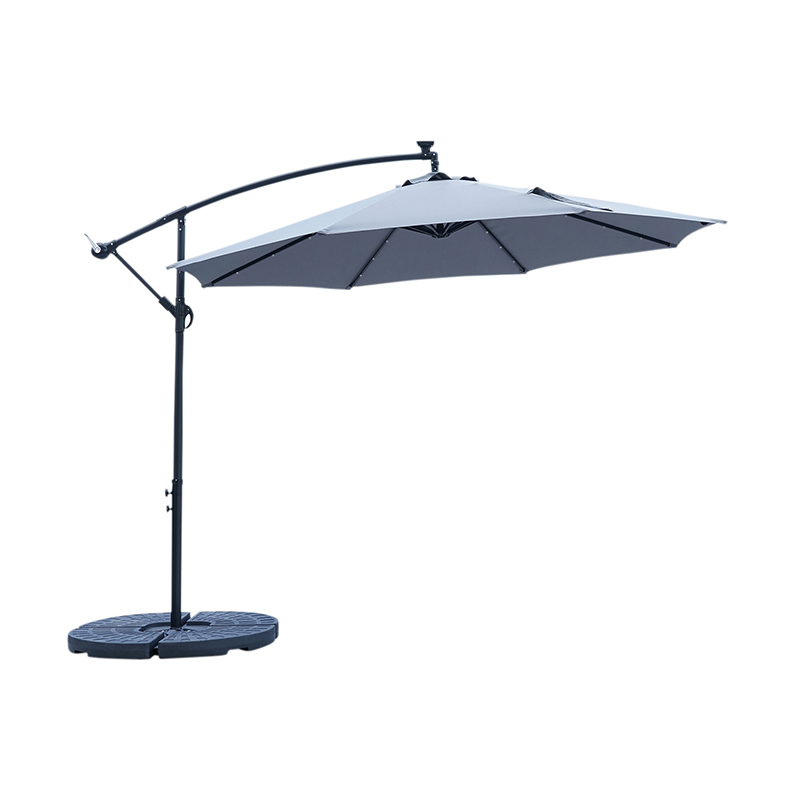
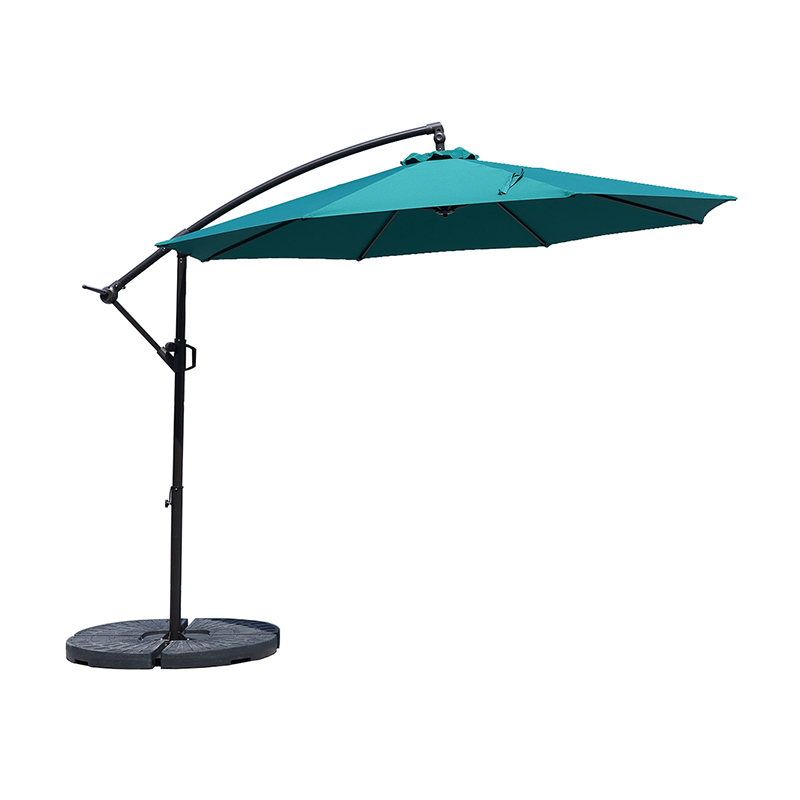
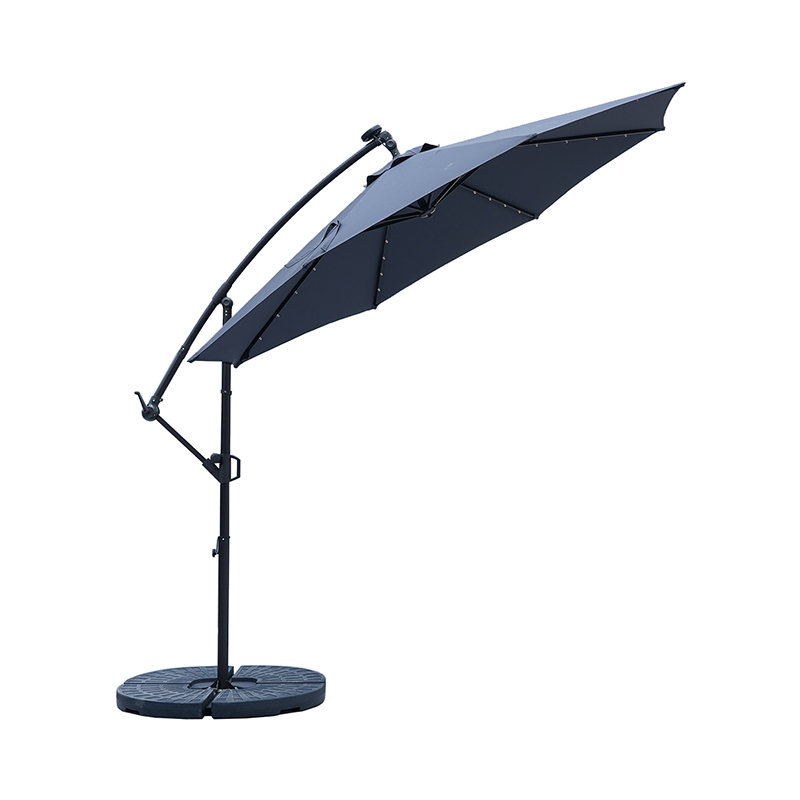
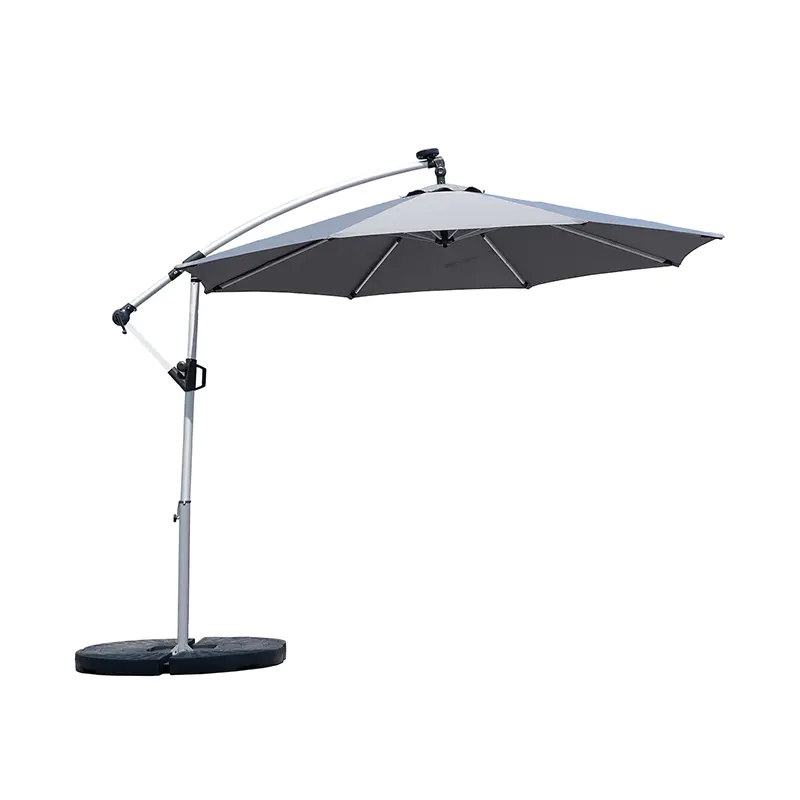
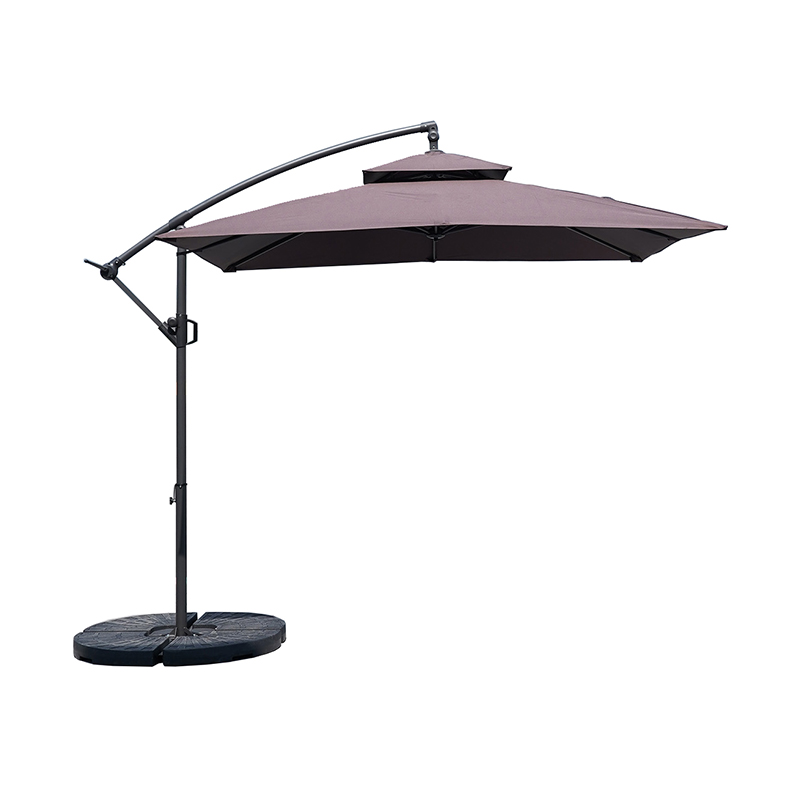
Offset and cantilever umbrellas solve this by placing the support structure away from the main shaded area. This leaves the center more open for furniture and customers.
They can be useful for:
There is one thing buyers should keep in mind. Because the support is offset, the frame and base need to handle different loads. The complete structure needs to be considered, not just the canopy size.
The base is easy to overlook, especially when the canopy is the part everyone notices.
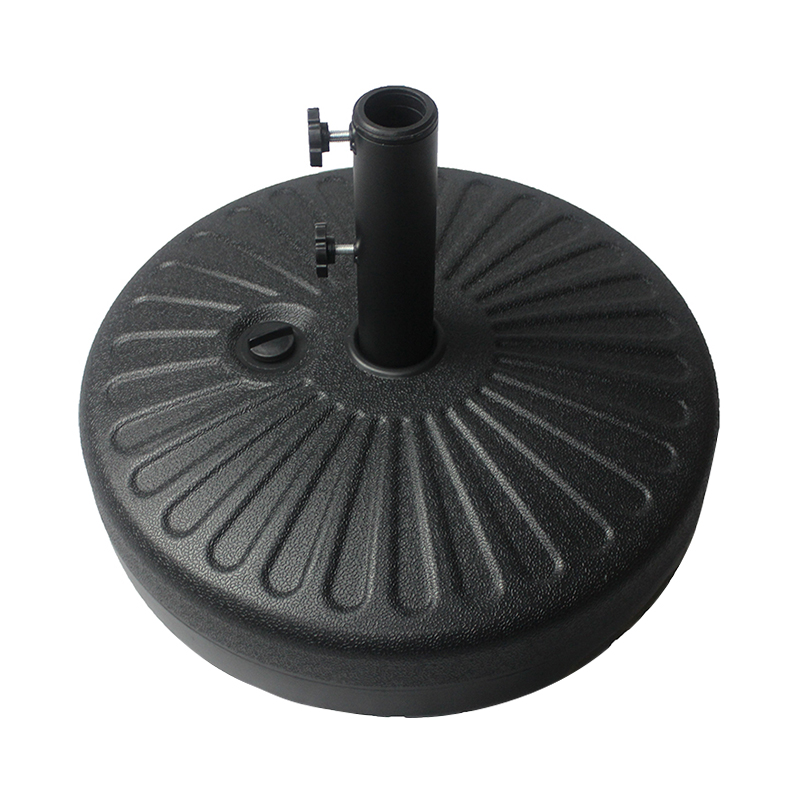
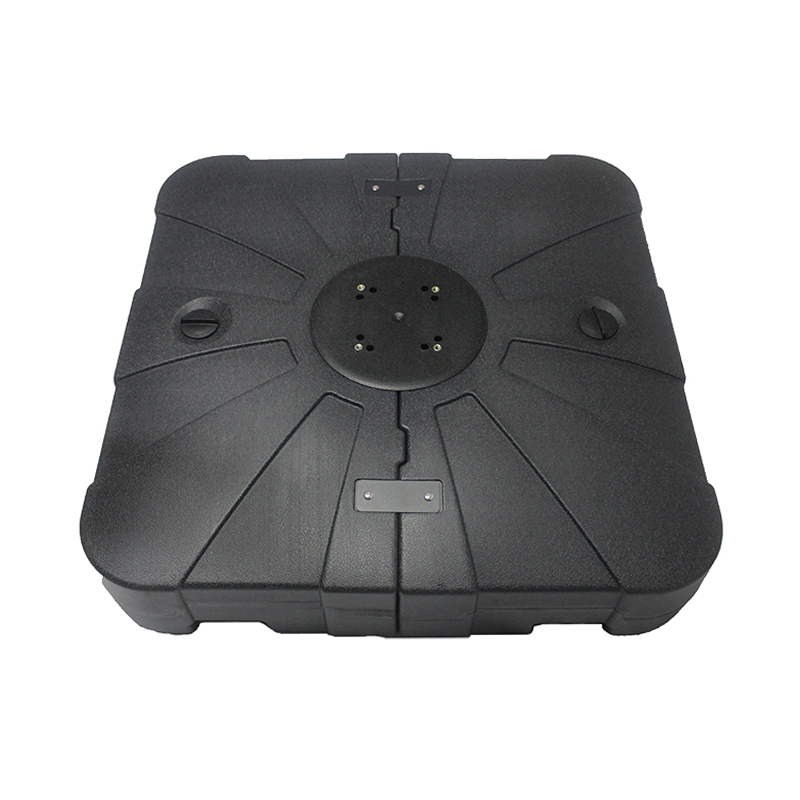
A large canopy generally requires a suitable support system. A lightweight portable base that works for a small café umbrella may not be appropriate for a much larger commercial model.
Buyers should check:
For a hotel or restaurant with a permanent outdoor layout, fixed mounting may be practical. A business that changes its outdoor furniture regularly may prefer portable bases.
The manufacturer should provide clear information about how each umbrella is supposed to be installed and supported.
Wind is one of those things that should be discussed before the order, not after the umbrellas arrive.
A larger canopy naturally presents more surface area to the wind. The frame, pole, base, and anchoring system all have to work together.
Important points include:
When weather conditions become unsuitable, the umbrella should be closed or secured according to the manufacturer's instructions.
For wholesalers and suppliers serving different regions, local wind and weather conditions are worth discussing with the manufacturer before choosing a model.
One fairly simple way to choose an umbrella is to start with the furniture instead of the product catalog.
A small round café table may work naturally with a round canopy. Several square dining tables can be arranged under square umbrellas. A long communal table may be easier to shade with a rectangular design.
The basic idea is to provide useful shade without making the seating area awkward.
A simple planning process is:
Measure the furniture → check customer movement → estimate the shade area → choose canopy dimensions → confirm the base and mounting method.
This sounds obvious, but it can prevent a lot of unnecessary changes later.
Canopy width gets most of the attention, but height matters too.
Customers and staff need enough headroom to move around comfortably. At the same time, the canopy needs to sit at a useful height for the shade it provides.
Height can affect:
A low canopy may become an obstruction. A very high canopy can change how the shade falls, particularly at different times of day.
For commercial projects, check both the open height and the closed dimensions before ordering.
Commercial umbrellas can spend many hours outdoors, so canopy fabric deserves some attention.
The material may be exposed to strong sunlight, rain, dust, and frequent opening and closing. Depending on the application, buyers may want to check:
Color is also worth considering for hotels, restaurants, and resorts. The umbrella may become part of the property's overall appearance.
For custom projects, manufacturers may offer specific fabric colors or printed designs, depending on their equipment and production capabilities.
Outdoor parasols can also be used as visible branding in restaurants, resorts, beverage promotions, and events.
Customization may include:
Where the logo is placed matters. A design that looks fine from above may not be visible from the customer side.
For B2B buyers, it is also worth confirming the printing method, artwork requirements, MOQ, and sample approval process before production starts.
Before placing a commercial order, buyers should get clear answers to a few basic questions.
For a larger project, sending the manufacturer site measurements or a simple layout drawing can be much more useful than describing the space in general terms.
The following table gives a starting point for common applications.
| Space type | Suggested design direction | Main factors |
|---|---|---|
| Small café | Compact round or square | Space and table clearance |
| Restaurant patio | Square or rectangular | Seating layout and shade |
| Hotel pool area | Larger canopy | Coverage and stability |
| Outdoor lounge | Offset or large round | Open seating arrangement |
| Narrow terrace | Rectangular | Efficient use of width |
| Large resort | Multiple coordinated umbrellas | Overall layout |
| Event space | Flexible multi-size setup | Changing layouts and mobility |
These suggestions are not fixed rules. The actual furniture and site should always be checked before finalizing the umbrella.
Not every business leaves its outdoor umbrellas outside all year.
Some restaurants and hotels use outdoor seating mainly during warmer months. In colder seasons or during severe weather, the canopies may need to be removed and stored.
That makes the closed size, canopy removal process, and storage requirements worth discussing.
For larger hospitality projects, consider where the umbrellas will be stored and whether staff can move them safely. Replacement fabric and hardware can also be useful if the umbrellas are expected to remain in service for several seasons.
Choosing an Outdoor Parasol Umbrella should start with the space it needs to serve.
Round umbrellas can work nicely with individual tables and smaller seating areas. Square models fit organized dining layouts, while rectangular canopies can make better use of long tables and narrow terraces. Offset umbrellas can keep the center of a seating area open when a central pole becomes inconvenient.
For commercial buyers, canopy dimensions should be considered together with furniture placement, customer movement, base stability, wind exposure, fabric requirements, and installation.
The goal is pretty simple: provide enough shade without making the outdoor area feel crowded or difficult to use. For manufacturers, wholesalers, and hospitality suppliers, matching umbrella size and shape to the actual application also makes it easier to offer suitable products for different commercial spaces.
In the end, the right specification is the one that fits the real site and the way people use it every day. Taking a little time to check the layout before ordering can save a lot of trouble once the umbrellas are installed.
Related Products
Contact Us for More Details
Don't hesitate to contact when you need us!
Contact Information
Add:
No.5-58(Building1&2in factory ) Kongao village, DatianDistrict, Linhai, Zhejiang, China
Phone:
+86-13958586110
Tel:
+86-576-89398116
E-mail:
Product Category
QR Code
Join our community and stay connected

Wholesale Outdoor Parasol Umbrella Factory

 English
 中文简体
中文简体
 Español