2026-09-18
A patio can serve several purposes over the course of a day. At lunchtime, people may be looking for shade around a dining table. Later in the afternoon, the same area can become a place for coffee, conversation, or a break outdoors. Once daylight fades, lighting becomes part of the setting as well.
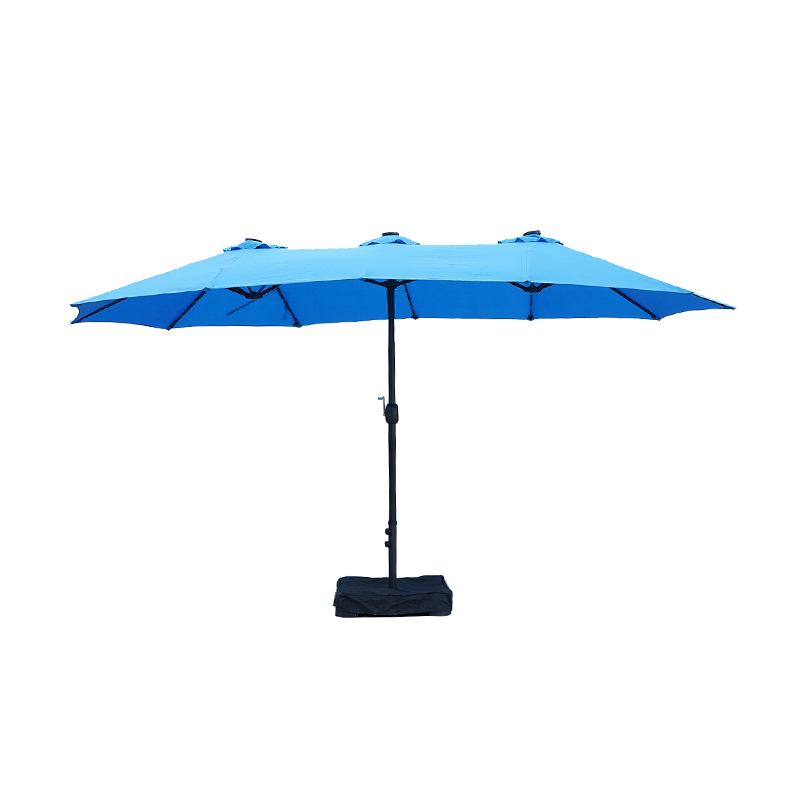
That makes outdoor shade more than a question of covering an area. The position of the canopy, the furniture underneath it, the way people move through the space, and the lighting arrangement all have to work together. A Large Outdoor Umbrella with Lights brings two of these functions into the same structure, but the result still depends heavily on how the umbrella is used.
For patios in restaurants, cafés, hospitality spaces, and private properties, small layout decisions can have a noticeable effect on everyday use. A canopy that fits the table but blocks a walkway creates one problem. Lighting that reaches the canopy but leaves the seating area poorly illuminated creates another. Looking at the whole space usually makes more sense than choosing an umbrella in isolation.
The first question is fairly simple: how much space actually needs to be covered?
A dining table with several chairs needs a different canopy arrangement from a small seating corner. The edge of the canopy should provide useful shade without making the patio feel crowded. This becomes particularly important where several seating groups share one outdoor area.
A larger canopy can cover a wider area, but the surrounding space still needs to accommodate the open structure. Trees, walls, railings, doors, and neighboring furniture can all limit where it can be placed.
The relationship between furniture and shade is often easier to judge from the seating positions rather than from the table alone. Someone sitting at the edge of the table may still be exposed to direct sunlight even when the table itself sits beneath the center of the canopy.
| Patio element | Question to consider |
|---|---|
| Table | Is the main dining or activity area covered? |
| Chairs | Do people sitting around the edge remain within the shaded area? |
| Walkways | Can people pass without coming too close to the structure? |
| Nearby fixtures | Are walls, railings, trees, or doors likely to interfere? |
| Open space | Is there enough room to open and close the canopy? |
This is why canopy size should be considered together with the actual patio arrangement. A Large Outdoor Umbrella with Lights may suit a spacious dining area, while a smaller outdoor setting may call for a different approach.
It is also worth looking at the patio at different times of day. The position of the sun changes, so an area that appears well covered in the morning may receive direct sunlight later. Furniture placement may need to account for this rather than relying only on the footprint of the canopy.
Once the required coverage is clear, furniture placement becomes the next practical issue.
There is no single layout that works for every patio. A central table can work naturally beneath a round canopy. A square or rectangular seating arrangement may make better use of a canopy with straight edges. On a commercial patio, the layout also has to leave enough room for staff to move between tables.
This can be easy to overlook when an outdoor area is planned around furniture dimensions alone. Chairs need room to move back. People need space to enter and leave their seats. Staff may need to carry food, drinks, or equipment through the same area.
For that reason, the canopy should be viewed as part of the circulation plan.
A practical arrangement usually keeps the main seating group under the central part of the shade while leaving the edges of the patio available for movement. Where several umbrellas are used, their positions should also be coordinated so that the space does not develop narrow passages between overlapping furniture and support poles.
Lighting adds another consideration. A seating area may work well during the day but feel disconnected at night if the illuminated area does not correspond with the furniture below it.
This is particularly relevant for patios that change function during the day. A café might use the same tables for daytime customers and evening gatherings. A hospitality space might rearrange chairs depending on the occasion. Flexible furniture placement can therefore be as important as the canopy itself.
Outdoor lighting does not need to illuminate every part of a patio equally. What matters is whether people can comfortably see the areas they are actually using.
For dining, the table naturally becomes a focal point. Plates, drinks, menus, and other items should remain visible without creating harsh light directly in people's eyes. Seating areas and nearby walking paths also need enough illumination for normal movement.
Integrated lighting can be positioned along the umbrella structure so that the light comes from above rather than from a separate lamp placed beside the table. This can leave the floor area less cluttered and keep the lighting visually connected to the seating zone.
There is also a difference between functional lighting and decorative lighting. A softly illuminated canopy may change the atmosphere of an outdoor area, but it does not necessarily provide enough light for dining. Conversely, a very bright source may be practical but uncomfortable.
The best arrangement depends on what happens beneath the canopy.
For example, a dining area may need light concentrated around the table, while a lounge area can rely on more diffuse illumination around chairs and side tables. The position of the LED elements therefore deserves attention during installation rather than being treated as an afterthought.
A Large Outdoor Umbrella with Lights can be particularly useful when an outdoor space needs to remain visually coherent after sunset. The canopy provides the physical boundary for the seating area, while the lighting helps maintain that boundary when natural light is gone.
Lighting also brings a less visible issue into the planning process: where the power comes from.
On an existing patio, an electrical connection may already be available nearby. That does not necessarily mean the cable can simply be placed across the floor. People walking between tables, moving chairs, or carrying equipment can come into contact with poorly positioned cables.
Cable routing should therefore be considered at the same time as umbrella placement.
Where a patio does not have convenient electrical access, an alternative power arrangement may be more appropriate. The choice depends on the lighting system, how frequently it is used, and the conditions around the installation area.
| Power planning point | Why it matters |
|---|---|
| Connection location | Determines where the umbrella can reasonably be positioned |
| Cable path | Helps prevent interference with people and furniture |
| Outdoor exposure | Connections need appropriate protection from the environment |
| Operation | Controls should be convenient for regular use |
| Inspection | Power components should remain accessible for checking |
This is especially relevant on busy commercial patios. Furniture may be moved frequently, and staff may need to clean the area at the end of the day. A lighting system that requires complicated handling can become inconvenient even when the illumination itself works well.
The same principle applies to private patios. If the lights are intended for occasional evening use, the power arrangement should not make opening, closing, or storing the umbrella unnecessarily difficult.
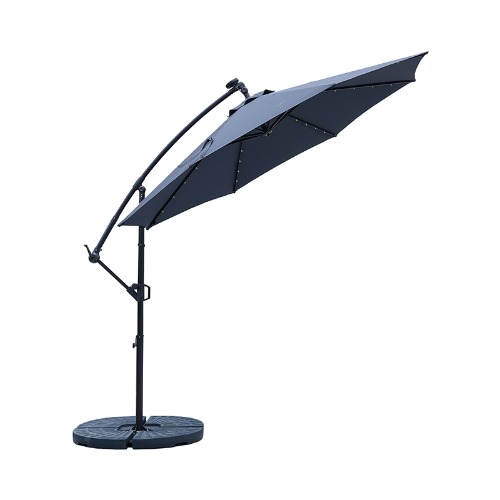
The supporting structure tends to receive less attention than the canopy, yet it has a direct connection with how the umbrella behaves during everyday use.
The pole provides the central support, while the ribs extend outward and hold the canopy in shape. Their arrangement needs to correspond with the overall design of the umbrella. As the canopy becomes larger, the relationship between these parts becomes increasingly relevant.
The opening mechanism is another practical consideration. Some patios require the umbrella to be opened in the morning and closed later in the day. Others may only open it when the seating area is occupied. Either way, the operating method should fit the routine of the space.
The frame is also exposed to outdoor conditions throughout its service life. Moisture, sunlight, dust, and repeated handling can affect surfaces and moving components. Regular cleaning and inspection can help keep the structure in usable condition.
Rather than looking at one specification on its own, it is more useful to consider the complete structure:
For a Large Outdoor Umbrella with Lights, this becomes a combined structural and practical question. The frame has to support the canopy and accommodate the lighting arrangement without making normal operation difficult.
A large open canopy is exposed to the surrounding environment, so stability cannot be separated from the installation location.
The base is one part of the equation. The ground beneath it matters as well. A paved patio, timber deck, landscaped area, or other surface may call for different installation methods. The umbrella should remain firmly positioned when people are moving around it or when normal outdoor conditions change.
The surrounding environment can make a difference too. An open terrace may experience more air movement than a patio protected by buildings or landscaping. Nearby structures can alter airflow, while trees may create falling debris that needs to be cleared from the canopy.
Weather also affects daily operation. When conditions become unsuitable, the umbrella should be closed and secured rather than left open simply because the patio is not currently occupied.
Routine checks are straightforward but useful. Look at the base, frame connections, canopy condition, and opening mechanism. If a component feels loose or the umbrella no longer opens and closes normally, it is better to address the issue before continued use.
Stability is therefore not just a feature of the umbrella itself. Installation, maintenance, weather awareness, and daily handling all play a part.
The combination of shade and lighting makes these umbrellas suitable for outdoor areas that remain active beyond daylight hours.
Restaurant patios are an obvious example. During the day, the canopy can provide a defined dining area. In the evening, integrated lighting can keep the same tables usable without adding another lighting fixture directly beside each table.
Cafés often have similar requirements, although the layout may be more informal. Tables can be arranged for individual customers, small groups, or short visits. An umbrella can help give the seating area a clearer identity while still allowing furniture to be rearranged.
Hospitality spaces can present a wider range of conditions. A terrace, garden seating area, poolside zone, or outdoor lounge may each require a different balance between shade and open space. The umbrella should fit the function of the particular area rather than being treated as a standard fixture.
Private patios follow a similar pattern. An outdoor dining space may become a social area later in the day, so lighting can extend the usefulness of the same seating arrangement.
Other outdoor commercial spaces may also use shaded areas for waiting, informal meetings, or customer seating. In each case, the underlying question is the same: how does the structure fit the way people already use the space?
The final decision usually comes down to how well the umbrella fits the actual patio.
Start with the space rather than the appearance of the canopy. Measure the area available for the open umbrella and look at the position of tables, chairs, doors, and walkways. Then consider how the space changes throughout the day.
Lighting comes next. Think about where people will sit after sunset and whether the lighting needs to focus on a table, a lounge area, or a wider section of the patio.
The support structure deserves equal attention. The pole, ribs, opening mechanism, base, and installation surface all need to make sense as a complete setup. A canopy that looks suitable but is difficult to operate or inconvenient to secure may not fit the routine of the space.
The following points provide a straightforward way to check the arrangement:
A patio works best when these details are considered together. Shade determines where people can sit comfortably, furniture determines how they move through the space, and lighting determines how that same area functions after daylight. A Large Outdoor Umbrella with Lights brings these elements into one outdoor fixture, but its practical value ultimately comes from how well it fits the space, the routine, and the people using it.
Related Products
Contact Us for More Details
Don't hesitate to contact when you need us!
Contact Information
Add:
No.5-58(Building1&2in factory ) Kongao village, DatianDistrict, Linhai, Zhejiang, China
Phone:
+86-13958586110
Tel:
+86-576-89398116
E-mail:
Product Category
QR Code
Join our community and stay connected

Wholesale Outdoor Parasol Umbrella Factory

 English
 中文简体
中文简体
 Español