2026-07-03
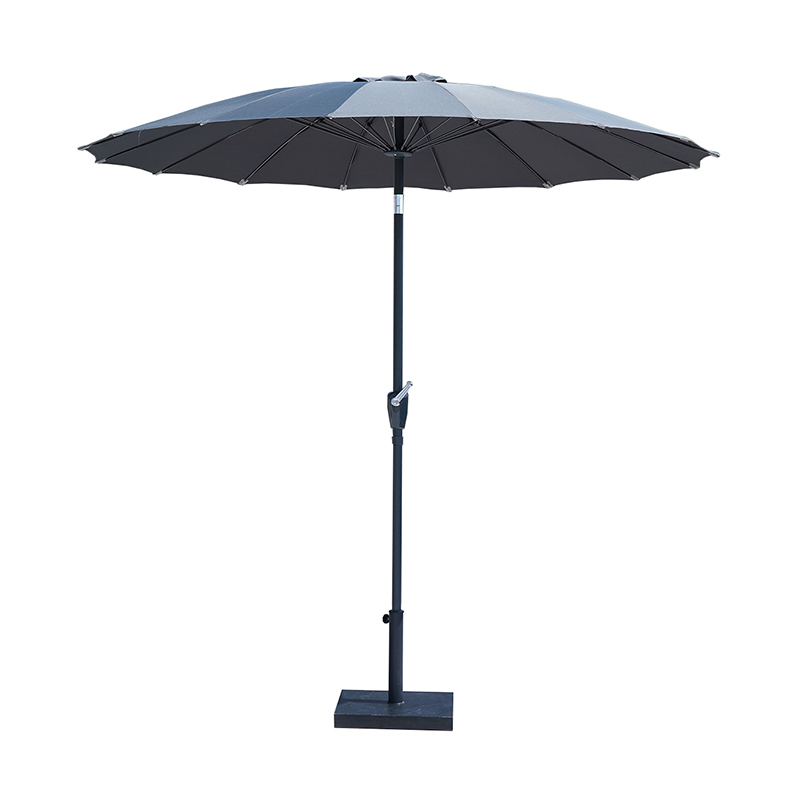
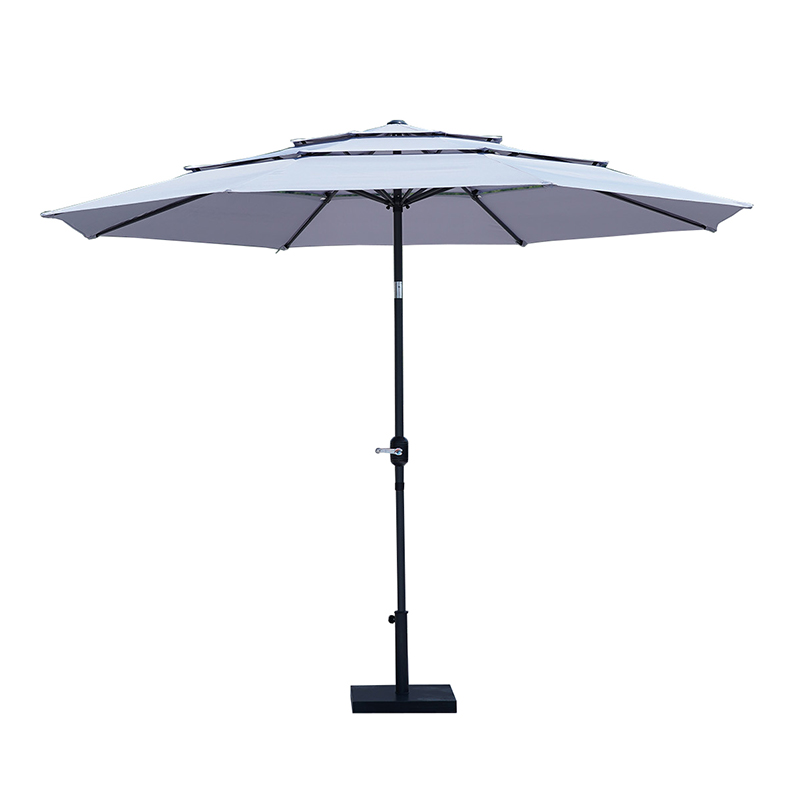
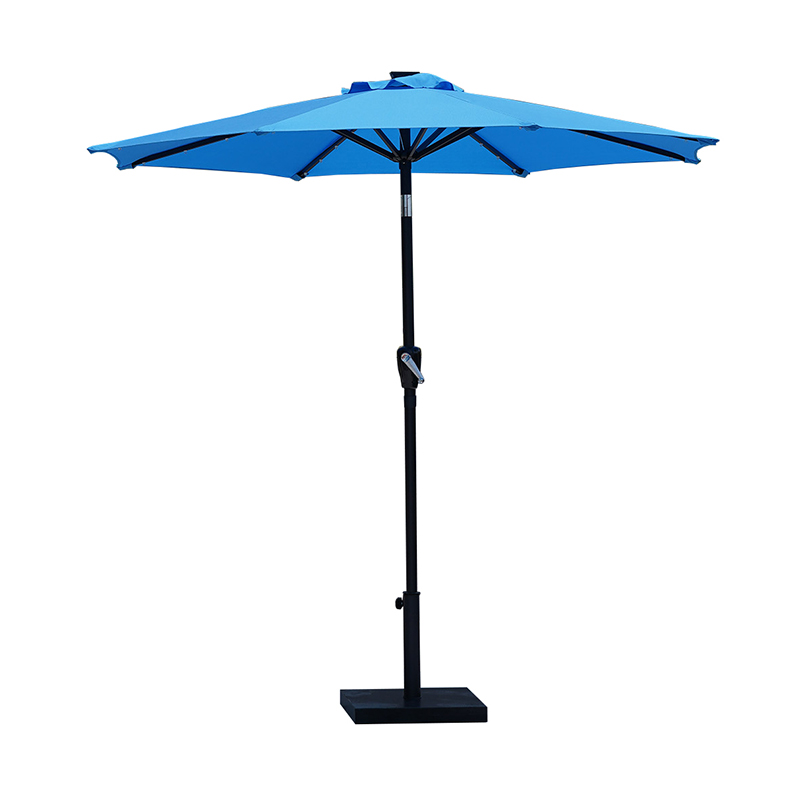
Outdoor shading structures are often evaluated through how they behave during repeated daily operation rather than how they appear when newly installed. In many outdoor layouts, a crank based umbrella system is used because it shifts lifting force away from direct manual pushing and into a controlled rotation process.
A Market Umbrella With Crank is not a single-action device. Movement passes through multiple internal stages, and each stage affects the next one. Small variations in alignment, friction, or fabric tension can change how the system feels during use. In real conditions, the difference is often noticed only after repeated opening and closing cycles.
In practice, attention tends to fall on a few recurring elements:
These observations form the base for understanding the system behavior in real outdoor use.
Smooth operation is usually related to how consistently force travels through the internal path. The crank does not directly lift the canopy; it transfers motion through connected internal points.
In a Market Umbrella With Crank, the rotation process depends on how well these internal transitions stay aligned. When alignment shifts slightly, the handle may still turn, but resistance becomes uneven.
There is also a practical layer that users often notice without naming it: the transition between "easy rotation" and "slightly heavier rotation." That change often reflects friction variation inside guiding sections rather than external load.
Some conditions that influence smoothness include:
When these elements remain balanced, movement feels continuous. When they are not, rotation may feel segmented rather than flowing.
Inside the structure, rotation does not stay at the handle level. It moves downward into a chain of mechanical responses that gradually convert spinning motion into upward lifting.
A Market Umbrella With Crank usually follows a layered sequence:
What is important here is not speed, but sequence. Each stage depends on the previous one reaching a certain level of tension. If one stage moves faster or slower than expected, canopy opening may appear slightly uneven.
The movement is gradual enough that changes are visible frame by frame, especially in the early opening stage when fabric begins to tighten but has not fully stabilized.
Shade control in outdoor environments is rarely static. Light direction changes across the day, and surrounding objects may partially block or reflect light. A crank based system allows adjustment without relocating the entire structure.
In a Market Umbrella With Crank, control is achieved through incremental position change. Instead of switching between fixed states, the canopy position can be adjusted gradually.
This affects shading behavior in several ways:
In practical use, this means the umbrella becomes part of the environment rather than a fixed barrier. The shading condition changes with small adjustments instead of full repositioning.
Long exposure introduces repeated mechanical and environmental stress. The structure does not fail suddenly in most cases; instead, small changes accumulate across moving and fixed points.
A Market Umbrella With Crank depends heavily on how different materials interact under repeated motion. Metal parts carry structural load, while fabric carries surface tension. These two behaviors do not age in the same way, which creates gradual imbalance if not controlled.
| Area | Function in System | Typical Change Over Time |
|---|---|---|
| Rib connection points | Load transfer during movement | Slight loosening or stiffness variation |
| Canopy fabric surface | Shade coverage and tension | Gradual stretch or tension shift |
| Central pole channel | Movement guidance | Friction change over repeated cycles |
These changes do not usually appear at once. They develop slowly and are often noticed during operation rather than inspection.
Stability is usually judged when something moves, not when it is standing still. In outdoor setups, a canopy system may look balanced at first glance, yet behave differently once airflow or ground conditions change slightly.
A Market Umbrella With Crank depends heavily on how weight and vertical alignment meet at a single point. If the base is slightly uneven, the effect does not always show immediately. It often appears during slow rotation or when the canopy is partially open, where load is no longer symmetrical.
Wind interaction is not only about strength but also direction shifts. A steady airflow tends to push the structure consistently, while irregular movement creates alternating pressure across different rib sections. That alternating pressure is what often leads to small visible tilts.
In real use, stability tends to follow these patterns:
It is not a single point failure situation, more like gradual redistribution of force.
Weather conditions do not change in a uniform way. Sometimes light movement builds slowly, and other times it shifts without a clear transition phase. The structure itself does not adapt automatically, so behavior depends on how it is handled during those changes.
In a Market Umbrella With Crank, movement control is manual and gradual. That means adjustment is more about timing than force. If changes are made too late, the structure is already under uneven load. If adjusted too early, the system may not fully reflect the actual environment condition.
There is also a practical observation often seen in outdoor spaces: canopy fabric responds before the frame does. It starts to ripple or shift slightly, while the pole remains visually unchanged. That delay sometimes creates misjudgment about actual conditions.
A few practical handling points:
The system remains reactive only through operation, not automatically.
Wear in this type of structure does not usually appear as sudden damage. It builds up slowly through repeated opening and closing cycles, especially in areas where movement and tension meet.
A Market Umbrella With Crank often shows early signs of change in resistance rather than visible damage. The crank may feel slightly different before any structural change is noticeable. That shift is usually connected to internal friction variation or minor alignment drift.
Maintenance behavior tends to be simple, but consistency matters more than intensity. Irregular care schedules often have less effect than steady light maintenance.
Some commonly observed habits include:
These actions do not extend material limits directly, but they slow uneven wear development across moving joints.
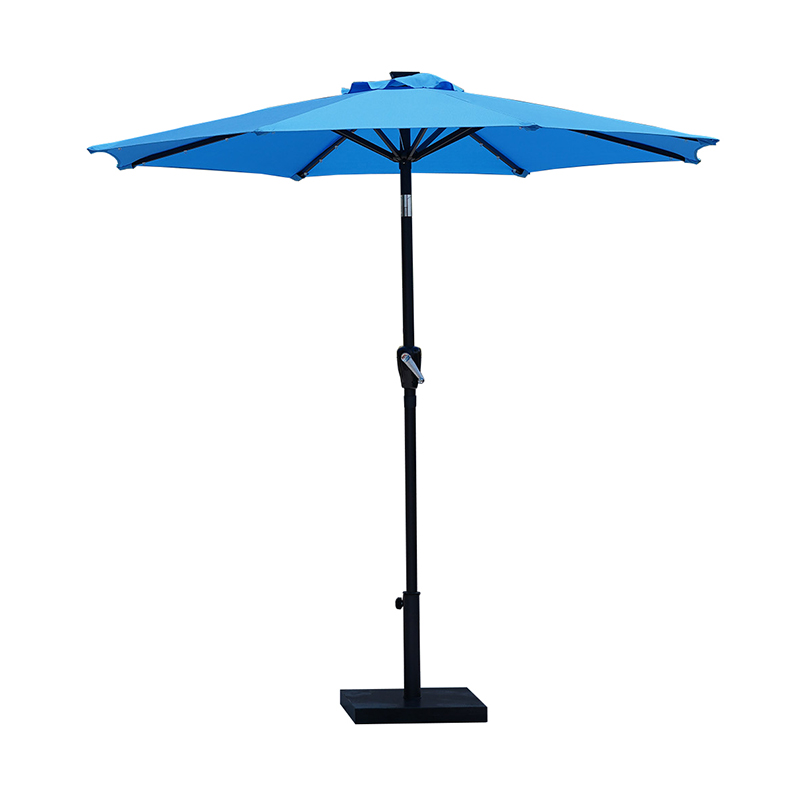
Outdoor shared spaces require equipment that does not demand repeated structural handling. The adjustment process needs to be simple enough for different users while still remaining predictable in movement.
A Market Umbrella With Crank fits into this type of environment because adjustment is centralized. Instead of lifting or shifting the entire structure, movement is handled through a single control point. That reduces variation in how different people interact with it.
There is also a spatial aspect. Seating layouts in these environments are not fixed. Tables may shift slightly, or light exposure changes across different areas. A crank based umbrella allows shading adjustments without reorganizing the entire layout.
In practice, it is often used because:
It becomes part of the space behavior rather than a fixed object.
Related Products
Contact Us for More Details
Don't hesitate to contact when you need us!
Contact Information
Add:
No.5-58(Building1&2in factory ) Kongao village, DatianDistrict, Linhai, Zhejiang, China
Phone:
+86-13958586110
Tel:
+86-576-89398116
E-mail:
Product Category
QR Code
Join our community and stay connected

Wholesale Outdoor Parasol Umbrella Factory

 English
 中文简体
中文简体
 Español