2026-08-28
A patio can look fully covered when an umbrella is opened, yet the actual shaded area may not remain where it is needed. As the sun changes position, the shadow moves across the ground, furniture, and walking areas. A canopy that provides useful shade during one part of the day may leave a table or lounge chair exposed later.
This is not necessarily a problem with the umbrella itself. Shade coverage depends on several factors working together, including the direction of sunlight, canopy height, canopy size, tilt, rotation, and the arrangement of outdoor furniture. The position of the base also affects where the canopy can sit over the space.
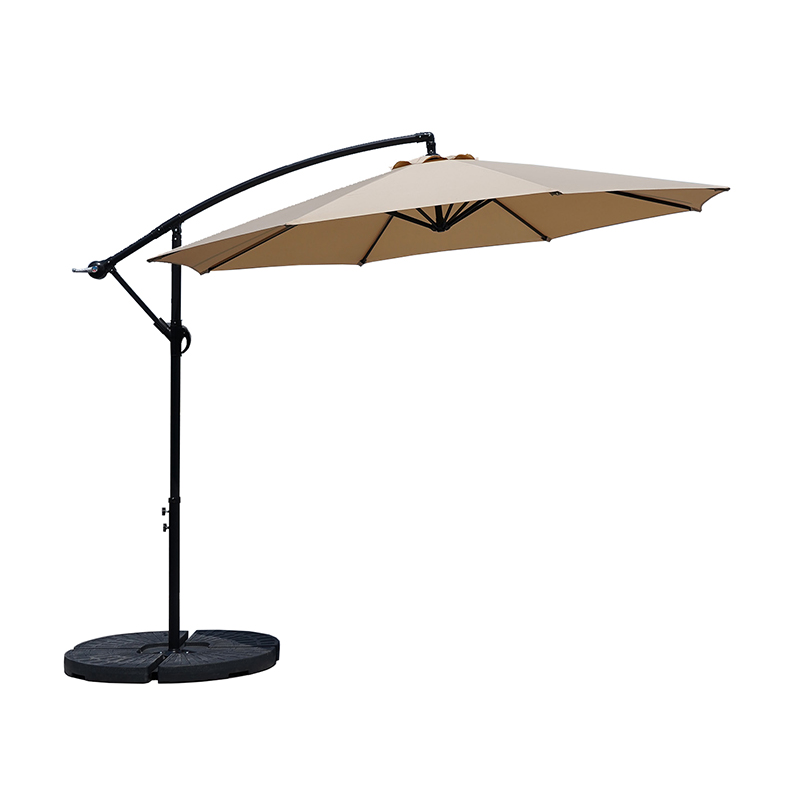
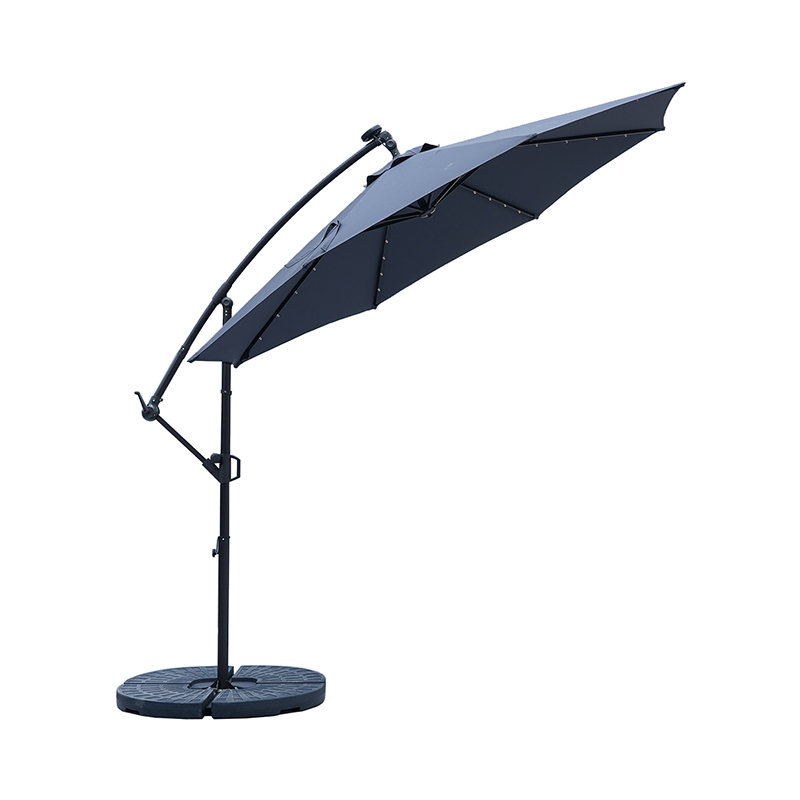
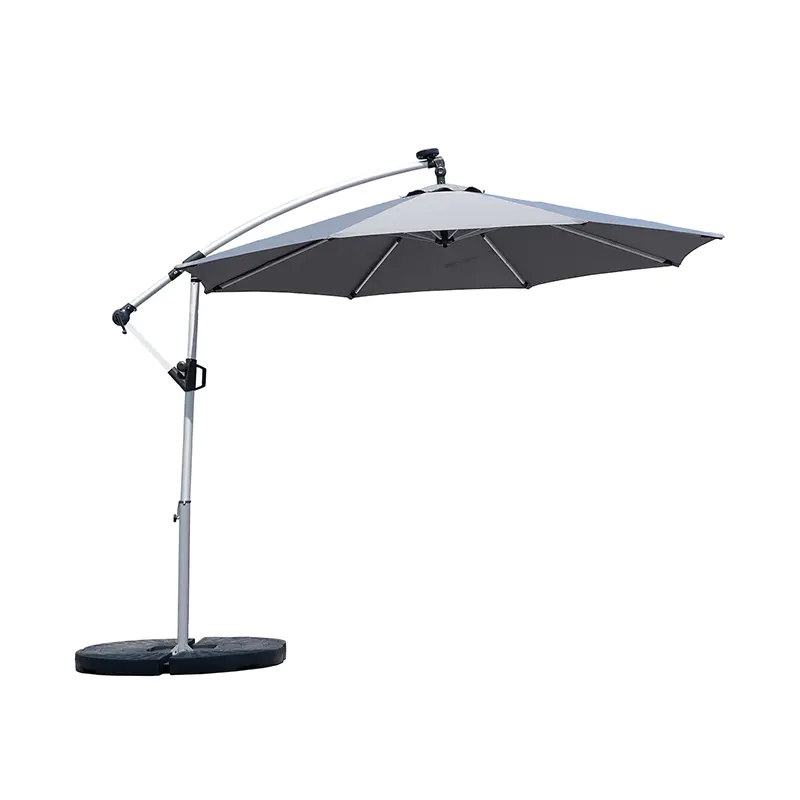
A Banana Cantilever Umbrella gives users more flexibility because the supporting structure sits away from the central shaded area. That arrangement makes it possible to adjust the canopy around furniture rather than placing a pole directly through the middle of a table. However, the available adjustment still needs to match the changing position of the sun and the layout of the patio.
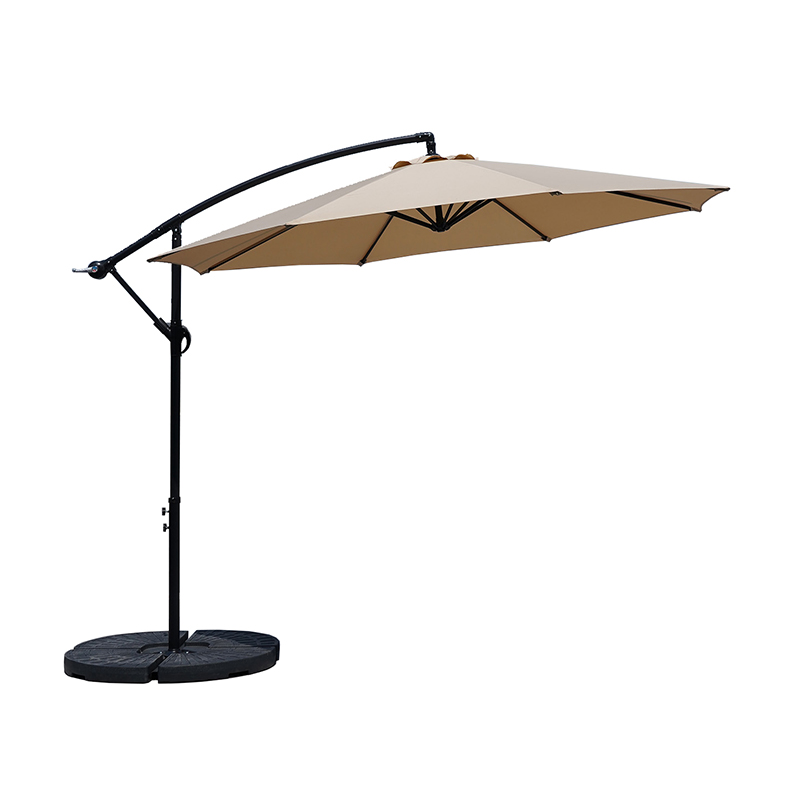
Sunlight does not remain at the same angle throughout the day. As the sun moves, the shadow produced by a fixed canopy also changes direction. This is one of the simplest reasons why a patio can move in and out of shade without any change to the umbrella itself.
When the sun is relatively high, the shadow tends to remain closer to the area beneath the canopy. As the sun becomes lower, the shadow stretches farther across the patio. This can move the shaded area away from a dining table or seating position.
The direction of the shadow also changes. A patio that receives shade on one side earlier in the day may receive it on another side later. A fixed canopy position therefore cannot provide identical coverage throughout daylight hours.
Several conditions can affect the visible shade pattern:
For this reason, checking shade at only one time of day may give an incomplete picture. A useful patio arrangement needs to account for how the shadow changes rather than treating the canopy as a fixed patch of shade.
The shaded area can move away from seating even when the furniture and umbrella remain in exactly the same positions. The main reason is the changing relationship between the sun and the canopy.
Consider a dining table placed beneath one side of the canopy. When the sun is positioned above and slightly to one side, the shadow may fall directly across the table. Later, sunlight can approach from another direction, causing the shadow to shift toward the opposite side of the patio.
The distance between the canopy and the furniture also matters. An offset design provides space underneath the canopy without requiring a central support, but the canopy still has a defined position. If the seating area sits near the edge of the available shade, even a moderate movement of the shadow can expose part of the furniture.
This is particularly noticeable when a patio has several separate activity areas. A single canopy may cover a table at one point and a lounge chair at another. Without adjustment, neither area is guaranteed to remain shaded continuously.
| Patio Condition | Possible Effect on Shade |
|---|---|
| Sun changes direction | Shadow moves across the patio |
| Furniture sits near canopy edge | Seating may leave the shaded area |
| Canopy is positioned high | Shadow can extend farther from the canopy |
| Patio has several seating zones | One area may become exposed as another receives shade |
The issue is therefore less about whether the canopy produces shade and more about whether the shadow remains aligned with the area being used.
Canopy height can change the way shade falls across a patio. A higher canopy allows sunlight to travel beneath it at a different angle, which can cause the shadow to appear farther from the structure.
A lower canopy can keep the shadow closer to the base area, although the available clearance for people and furniture must also be considered. If the canopy is positioned too low, movement around the seating area may become inconvenient.
Height also interacts with the sun angle. A setting that works during a period of higher sunlight may behave differently when the sun becomes lower. This means canopy height should not be considered separately from the time of day and the intended seating position.
When assessing the setup, it helps to look at the relationship between:
A small change in height can alter the position of the shadow without changing the canopy's physical size. This is one reason why two patios using similar umbrellas can experience noticeably different shade patterns.
Canopy size determines how much physical area can potentially be shaded, but the actual shaded area depends on sunlight and positioning. A larger canopy can provide broader coverage under suitable conditions, yet its shadow can still move away from the intended area.
The shape of the canopy also influences how its edges correspond with a patio layout. A dining table, sofa, or group of chairs may not align evenly with the available shaded area. Corners and outer seating positions can become exposed even when the center remains covered.
A practical way to assess canopy size is to start with the furniture rather than the canopy. Consider where people sit, where chairs are pulled out, and where walking space is required. The usable shade should relate to these areas.
For example, if chairs extend beyond the table, measuring only the tabletop may give an inaccurate impression of the required coverage. The shaded zone needs to account for the space occupied by people as well as the furniture itself.
The relationship can be viewed simply:
Canopy size → potential shade area → shadow movement → actual usable shade
A larger canopy does not remove the effects of changing sunlight. It simply provides a different amount of area from which shade can be projected.
Tilting changes the orientation of the canopy in relation to the sun. Instead of keeping the canopy in one fixed plane, an adjustable design allows the shaded area to be redirected when sunlight begins entering from a different angle.
This can be useful when the sun is lower in the sky. Rather than moving the entire base, the canopy can be adjusted to change the direction in which it blocks sunlight.
Tilt adjustment is especially relevant when the exposed area is close to the edge of the existing shadow. A small change in orientation can shift that edge toward the seating area.
However, tilt should not be viewed as a way to maintain identical shade under every condition. The available range of movement, canopy position, and surrounding space still determine what can be achieved.
A useful approach is to adjust the canopy according to the area that needs shade at that particular time. If the table is covered but the chairs on one side are exposed, changing the canopy angle may redirect some of the shade toward those seats.
Rotation addresses a different problem from tilt. Tilting changes the angle of the canopy, while rotation changes its horizontal position. Together, these adjustments can provide greater flexibility when the direction of sunlight changes.
For an offset patio umbrella, rotation can be particularly useful because the canopy is not fixed directly above the center of the furniture. The canopy can be repositioned around the seating area without necessarily moving the base.
This can help when the sun shifts from one side of the patio to another. Instead of accepting a growing patch of direct sunlight, the canopy can be repositioned to bring the shaded area closer to the seating zone.
The practical sequence can be straightforward:
Rotation is therefore most useful when it responds to the changing position of the sun rather than being treated as a fixed setting.
Furniture placement is another common reason that part of a patio remains exposed. A canopy may be positioned correctly relative to a table but not necessarily relative to the chairs surrounding it.
Chairs move throughout the day. People pull them away from the table, turn them toward a view, or place them beside a lounge area. As the furniture footprint changes, the shaded area may no longer match the space being occupied.
The position of the base can also influence this relationship. Because the support sits to one side, the canopy has a particular reach over the furniture. If the base is placed too far from the seating area, part of the canopy's useful coverage may fall outside the space that needs it.
This becomes more noticeable on patios with irregular layouts. A table may sit close to a wall while chairs extend toward an open area. A single canopy position may not cover every seat equally.
Before changing the canopy, check the furniture arrangement. Sometimes moving a chair or adjusting the table position creates a better relationship with the existing shade without requiring a major change to the umbrella.
Repositioning works best when it responds to the actual cause of the exposed area. Moving the base without considering sunlight may solve one problem temporarily while creating another later in the day.
Start by identifying where shade is needed rather than where the canopy currently sits. Then consider whether the issue comes from the sun's direction, canopy height, canopy angle, rotation, or furniture placement.
For a patio with changing sunlight, adjustments can be approached in stages:
The objective is not to keep one fixed patch of shade throughout the day. Outdoor shade naturally changes as sunlight changes. A more useful arrangement is one that allows the canopy to be repositioned when the shaded area no longer corresponds with the way the patio is being used.
A Banana Cantilever Umbrella can therefore leave part of a patio unshaded for several ordinary reasons. The sun angle changes, the shadow moves, canopy height affects its reach, and furniture may extend beyond the shaded area. Canopy size, tilt, rotation, and base placement then determine how easily the setup can be adjusted to follow those changes.
Related Products
Contact Us for More Details
Don't hesitate to contact when you need us!
Contact Information
Add:
No.5-58(Building1&2in factory ) Kongao village, DatianDistrict, Linhai, Zhejiang, China
Phone:
+86-13958586110
Tel:
+86-576-89398116
E-mail:
Product Category
QR Code
Join our community and stay connected

Wholesale Outdoor Parasol Umbrella Factory

 English
 中文简体
中文简体
 Español