2026-09-04
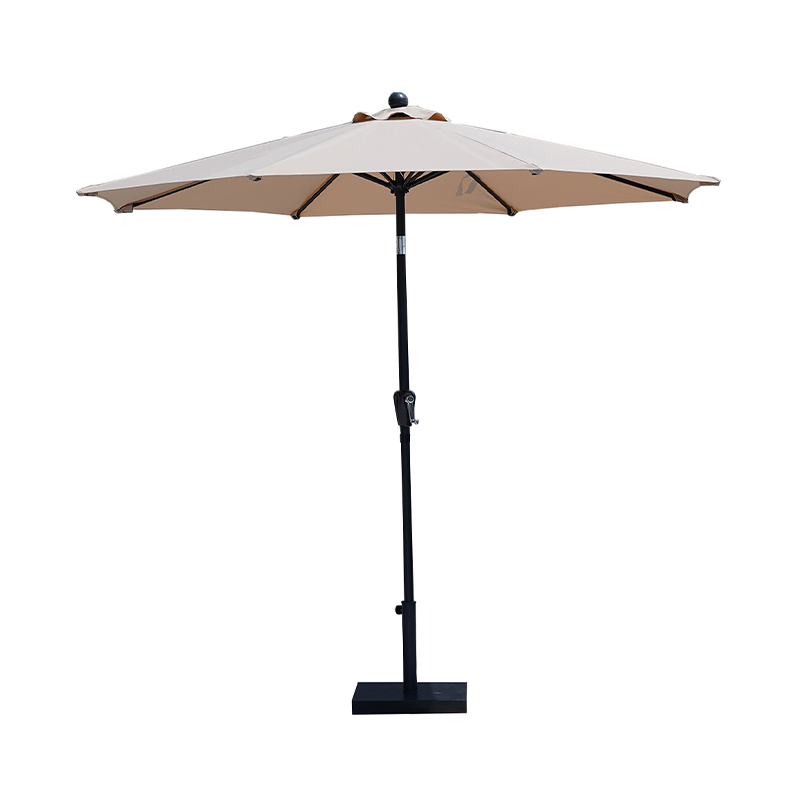
Outdoor shade has become an important part of many open-air spaces, from residential patios to dining areas and shared outdoor facilities. As these spaces become more comfortable and functional, shade structures also need to cover wider areas without taking up unnecessary floor space. This has increased attention on the design of the Large Outdoor Shade Umbrella, particularly when the canopy needs to remain steady under changing outdoor conditions.
Wind is one of the reasons that larger shade structures require careful design. A larger canopy gives people more shaded space, but it also presents a wider surface to moving air. The way the canopy is shaped, supported, ventilated, and anchored can therefore affect how the whole structure behaves.
The issue is not simply whether an umbrella can withstand wind. Stability depends on how several parts work together. Canopy size, canopy shape, frame construction, base design, ventilation, pole position, and fabric characteristics all influence the way forces move through the structure.
A canopy creates a broad surface above the people and furniture underneath it. When the canopy becomes larger, more of that surface can interact with moving air. Even when the umbrella is designed for shade rather than weather protection, wind conditions still need to be considered during product development.
The position of the canopy also matters. A shade umbrella stands above the ground, leaving air space underneath it. Wind can approach from different directions, move beneath the canopy, pass around the edges, or press against the upper surface. These changing air paths can produce movement in the canopy and supporting frame.
A larger canopy can also make movement easier to notice. A small shift near the edge may have little effect on a compact structure, while the same type of movement across a broader canopy can place greater demands on the frame and base.
Several factors interact:
This is why simply increasing canopy size is not an isolated design decision. A wider shaded area needs corresponding attention to the structure underneath it.
| Design factor | Possible effect on wind behavior |
|---|---|
| Larger canopy | Provides wider shade while increasing exposed surface |
| Canopy position | Changes how air reaches and moves around the canopy |
| Open underside | Allows air to move beneath the canopy |
| Frame arrangement | Determines how movement is transferred through the structure |
| Base design | Helps keep the structure positioned on the ground |
Size is only one part of the equation. The outline of a canopy can also influence the way air moves around it.
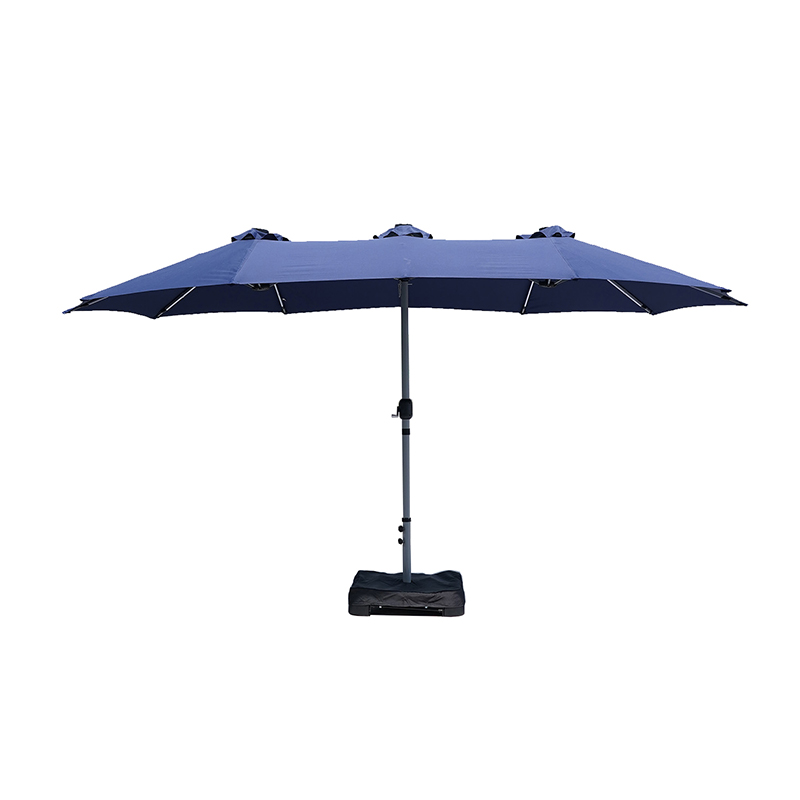
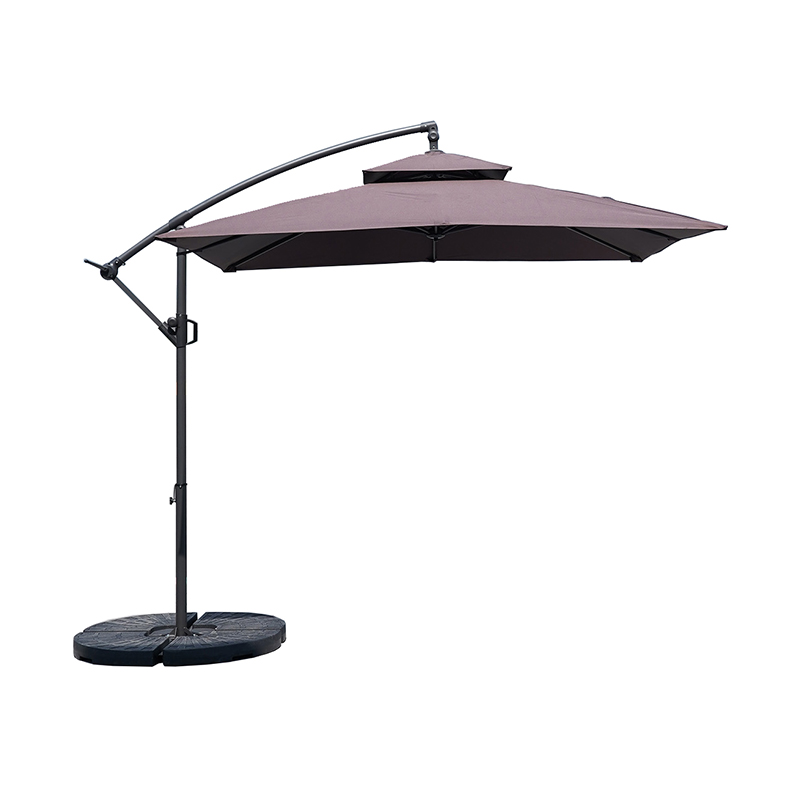
Round canopies present a continuous curved edge, while square and rectangular designs have corners and longer straight edges. These differences can change the way air separates from the canopy and how movement is distributed across its surface.
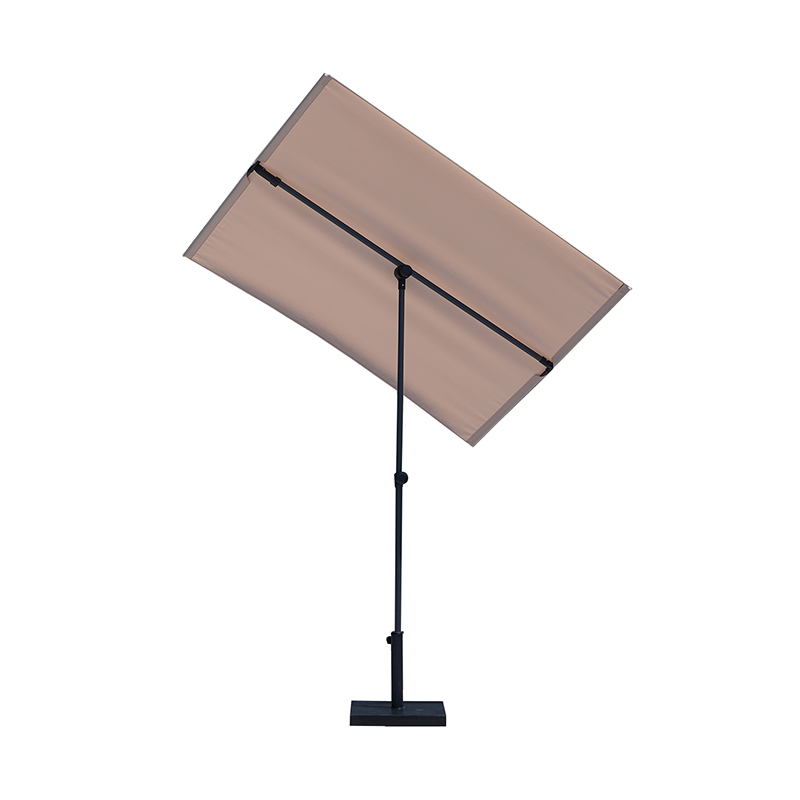
A rectangular canopy, for example, may suit a long dining table or an extended seating arrangement. Its shape can make better use of a particular area, but its longer edges and corners become part of the wind-related design considerations.
The tension of the fabric also interacts with canopy shape. A fabric surface that is properly supported can behave differently from one that is loose or uneven. Changes in tension may occur after repeated outdoor use, cleaning, moisture exposure, or storage.
The choice of shape therefore involves more than appearance. Manufacturers have to consider how the canopy will occupy space and how its outline will interact with the supporting frame.
A useful way to look at the issue is to separate two questions. The first is whether the canopy provides the desired shaded area. The second is whether its shape can be supported properly under the conditions where it will be used. Treating these as separate design questions can help prevent a larger canopy from creating structural problems elsewhere.
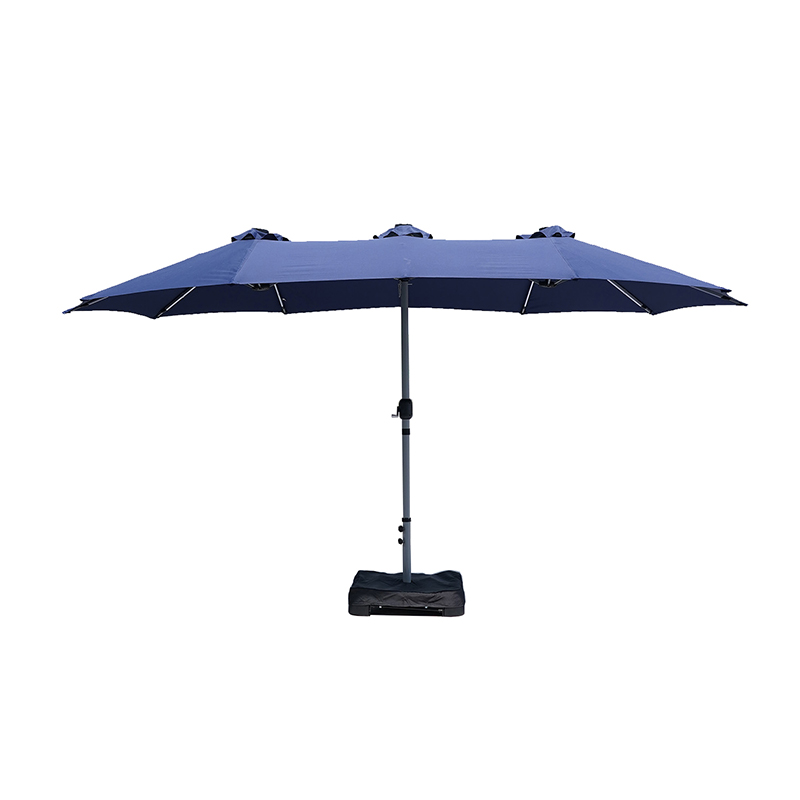
The frame provides the connection between the fabric above and the supporting point below. When wind causes the canopy to move, that movement is transferred through the ribs, joints, central support, and other connecting parts.
This makes the arrangement of the frame important. A structure with several connected components has to maintain its shape while allowing the umbrella to open and close as intended. Each connection also needs to work consistently during repeated use.
The supporting ribs are particularly relevant because they hold the canopy in its intended form. If the ribs flex, the fabric can change shape. That change may then affect how air moves across the canopy.
Connections also deserve attention. Repeated opening, closing, rotation, and exposure to outdoor conditions can place stress on moving parts. A well-considered frame therefore needs to balance movement during normal operation with sufficient support once the umbrella is open.
Frame materials matter as well, but material choice should not be considered separately from the overall structure. A rigid component does not automatically create a stable umbrella if the connections or supporting points are poorly matched.
For manufacturers, the challenge is to develop a frame that works as a connected system rather than treating each component independently.
The forces acting on the canopy eventually have to be transferred to the ground. The base is therefore closely connected to the stability of a large shade structure.
A larger canopy can create greater movement when exposed to wind. If the base does not provide sufficient support, movement at the top can become movement at the bottom. The umbrella may shift, rotate, or become difficult to keep in its intended position.
Base design depends on the overall configuration of the umbrella. A center-supported structure distributes its support differently from an offset design. The surface beneath the base also matters. A smooth paved patio, a solid deck, and another outdoor surface may provide different conditions for positioning and securing the structure.
Mobility introduces another consideration. Wheeled bases can make larger umbrellas easier to reposition, but the ability to move a structure should not be confused with stability while it is in use. A practical design needs to address both functions.
The relationship can be viewed simply:
Canopy → frame → pole → base → ground
If one part is not properly matched with the others, the stability of the complete structure can be affected.
This relationship is particularly important for a Large Outdoor Shade Umbrella, because a larger upper structure places greater importance on the support beneath it.
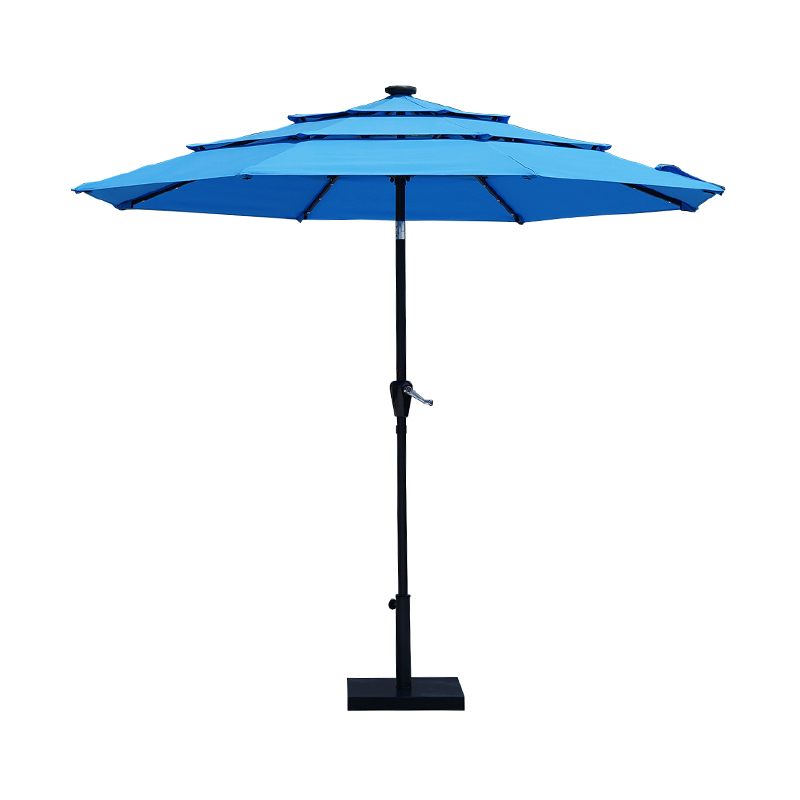
A solid canopy can interrupt the movement of air above an outdoor seating area. A vented design creates an opening that allows some air to move through the upper portion of the canopy.
The purpose is not to eliminate wind. Instead, ventilation can provide another path for air to move through the structure. This may change how pressure and movement are distributed across the canopy.
The location and size of a vent influence how it functions. The surrounding fabric, canopy shape, and frame arrangement also affect airflow. For that reason, a vent should be considered as part of the complete canopy design rather than as an isolated feature.
Vents can also influence the feel of the shaded space. Air movement beneath an umbrella is affected by the surrounding environment, so ventilation is one factor among several rather than a standalone solution.
For manufacturers, the practical challenge lies in balancing shade coverage, fabric construction, appearance, and airflow. An opening that changes the canopy's behavior also needs to fit the rest of the structure.
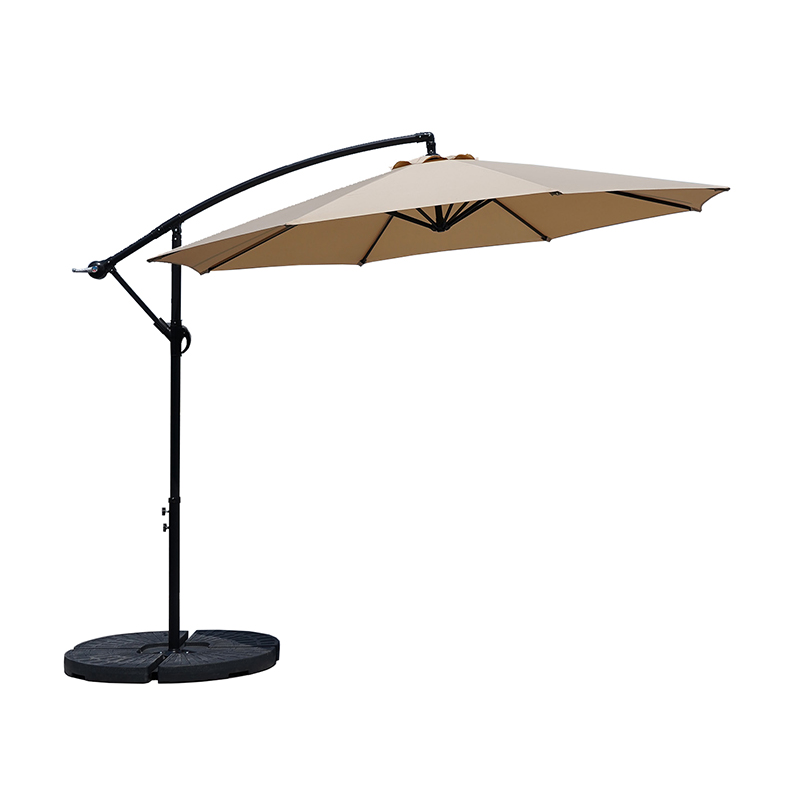
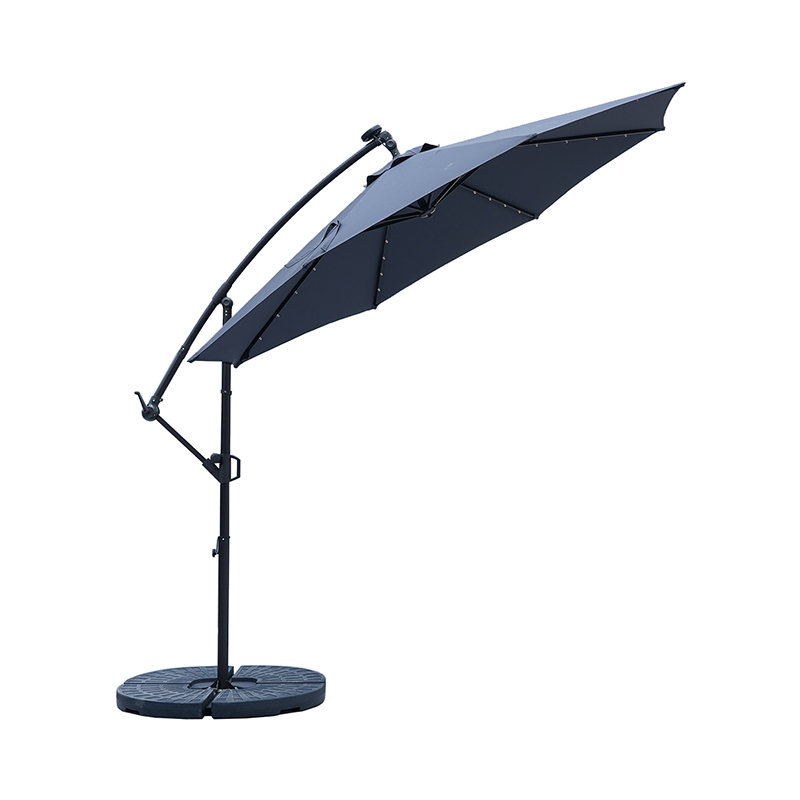
An offset or cantilever arrangement places the supporting pole away from the center of the shaded area. This creates useful open space beneath the canopy, particularly around tables and seating.
However, moving the support point also changes how forces travel through the structure. Instead of passing directly down through the center, movement at the canopy has to travel through the supporting arm and toward the base.
That makes the connection between the upper arm, pole, and base especially important. When the canopy moves, the supporting system needs to respond as a connected structure.
The arrangement can provide greater flexibility for outdoor layouts, but it also introduces different structural considerations from a center-pole umbrella. Manufacturers therefore need to consider the canopy and supporting system together.
| Structural area | Main design consideration |
|---|---|
| Canopy | Size, shape, tension, and airflow |
| Ribs | Support for the canopy surface |
| Pole | Transfer of movement toward the base |
| Offset arm | Support for an off-center canopy |
| Base | Ground support and positioning |
| Connections | Repeated movement and operation |
The important point is that an offset design changes the path through which movement travels. Its stability cannot be assessed by looking only at the canopy or only at the base.
Fabric is often treated as a visual part of an outdoor umbrella, but it also affects how the canopy responds to moving air.
A fabric surface needs enough flexibility to open and close while maintaining a useful shape when extended. If it becomes loose, stretched, damaged, or uneven, the canopy may respond differently to airflow.
Fabric weight can also influence the way the canopy moves. A heavier material may behave differently from a lighter one, while different fabric constructions can have different levels of flexibility and tension retention.
Outdoor exposure introduces additional considerations. Sunlight, moisture, dirt, repeated folding, and cleaning can gradually change the condition of the fabric. These changes may affect its appearance as well as the way it sits on the frame.
This does not mean fabric alone determines wind stability. The canopy material works together with the ribs, pole, connections, and base. A fabric choice that seems suitable on its own still needs to match the rest of the structure.
Manufacturers therefore have to consider fabric behavior throughout the expected use cycle rather than only when the product is new.
Wind stability is becoming a design issue that crosses several parts of outdoor umbrella manufacturing. Increasing the shaded area cannot be separated from the frame, support system, fabric, and base.
Instead of treating each component as an independent part, manufacturers can evaluate how the components interact. A larger canopy may require changes to the supporting frame. A different frame may require a different base. An offset structure may require closer attention to the connection between the pole and support arm.
The same principle applies to ventilation and fabric selection. A vent affects airflow through the canopy, while fabric tension influences how that canopy reacts to movement. Each decision can therefore create another design consideration elsewhere in the product.
Several areas tend to receive attention during development:
This approach also explains why wind stability is not simply a matter of making one component heavier or stronger. The performance of a Large Outdoor Shade Umbrella depends on how its individual parts work together.
As outdoor spaces continue to use wider shaded areas, the design challenge is to provide that coverage while keeping the structure practical to operate and appropriate for its intended setting. Wind stability therefore remains closely connected with canopy design, structural support, airflow, materials, and manufacturing decisions rather than being an issue that can be addressed by a single feature.
Related Products
Contact Us for More Details
Don't hesitate to contact when you need us!
Contact Information
Add:
No.5-58(Building1&2in factory ) Kongao village, DatianDistrict, Linhai, Zhejiang, China
Phone:
+86-13958586110
Tel:
+86-576-89398116
E-mail:
Product Category
QR Code
Join our community and stay connected

Wholesale Outdoor Parasol Umbrella Factory

 English
 中文简体
中文简体
 Español